
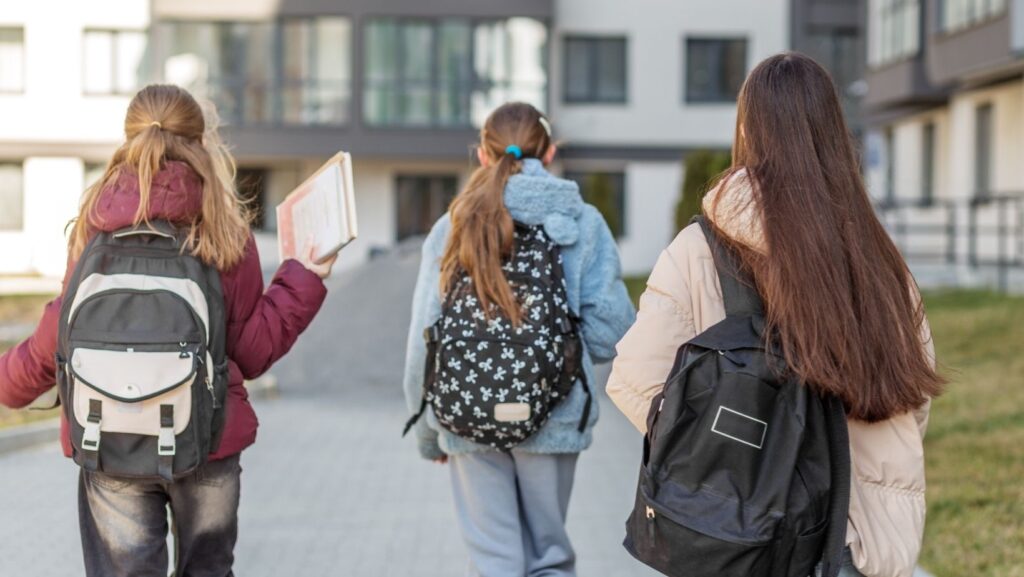
Walk past any school gate at 7 am, and you’ll see small kids hauling backpacks bigger than them. Add textbooks, lunchboxes, water bottles, sports kit, art supplies, and a school bag’s weight, and the total adds up fast.
For parents watching their child trudge to school under a load that would make an adult flinch, a school bag with wheels makes sense. We cover why the weight children carry is a real concern for growing spines, when a wheeled bag is the right call and why fit, frame, and guarantee matter more than price.
The weight problem
The South African Society of Physiotherapy recommends that a child’s school bag should weigh no more than 10% of their body weight. For a 30kg Grade 3 learner, that’s 3kg. In practice? Most school bags tip the scales well above that, especially on days with library books, swimming kit, or projects.
What a heavy school bag does to a growing body
Carrying excessive weight on developing spines is linked to poor posture, muscle strain, and habits that follow children into later life. The shoulders roll forward. The lower back compensates. The neck juts out. None of this is good news for a body that’s still figuring out how to grow.
How a school bag with wheels protects growing spines
Instead of the full load resting on the shoulders and spine, the wheels and frame of a trolley bag take the weight. On flat surfaces such as corridors, classrooms, school grounds and pavements, they provide a meaningful reduction in physical strain.
Wheels aren’t the whole answer
Here’s where you, as a parent, need to be careful. Not every wheeled school bag is built for the job.
What makes a wheeled school bag genuinely worth using comes down to construction. The frame needs to be rigid enough to keep the bag upright and stable when loaded. The wheels need to handle real-world surfaces. Critically, the bag needs to function as a proper backpack on the days a child has to carry it up stairs or across rough ground.
That kind of engineering matters because a school bag is one of the hardest-working items a child owns. It gets dropped, kicked, stuffed, rained on, and dragged across tar five days a week for a full year.
When a wheeled bag is the right call
Trolley bags aren’t right for every child or every school. If your child walks long distances on uneven ground, faces lots of stairs, or attends a school where bags need to be carried up to upper-floor classrooms, a traditional backpack may serve them better.
But for many children whose school day involves flat corridors, paved walkways, and short distances between the car or bus and the classroom, a wheeled bag is a practical way to reduce the daily load on a developing spine. Especially on heavy-book days, when the alternative is watching a small child lean forward under a bag nearly the size of their torso.
The right fit for a growing child
Fit matters as much as the wheels themselves. A bag sized for a Grade 7 isn’t appropriate for a Grade 1, even with wheels. The strap length, back panel height, and overall dimensions all need to match the child’s frame. Children also grow in unpredictable bursts, and an adjustable harness can be useful if you don’t want to replace a bag just because your child has grown.
The three-year question
A school bag is a multi-year purchase, not a one-season buy. A three-year guarantee reflects a quality promise that the bag will last at least that long. If a bag is still structurally sound after 18 months of school runs, it’s still protecting your child’s back.
For growing backs, the right wheeled school bag is one of the simplest interventions a parent can make.
Conclusion
Children’s spines are still forming, and as a result, the bags they carry every school day shape posture, habits, and physical comfort. A well-built wheeled school bag, one with a proper frame, durable materials, and the right sizing, is one of the easiest, most practical investments a parent can make in their child’s long-term back health.
If you’re a parent tired of watching your child stagger to the gate under a bag that’s too heavy, the answer isn’t to pack lighter. The answer is to carry smarter.