
Walk into a kitchen and you can usually date it within a few years, the way you can date a haircut in an old photo. Harvest gold and avocado appliances place a kitchen in the 1970s instantly. Honey-oak cabinets with a busy granite counter say turn of the millennium. A wall of glossy red lacquer or an all-gray everything points to more recent fashions that already feel like they are cooling. Each of these was, in its moment, the obvious choice, the thing everyone wanted. And each became the very thing that made a kitchen look old.
It is worth asking why this keeps happening, and why one timeless kitchen cabinet style in particular has slipped through every one of these waves without ever becoming a punchline. The short version: dated kitchens come from committing bold trends to permanent surfaces, so keep the cabinets neutral and proven, like a shaker in a classic finish, and put the trends where they are cheap to change.
What Makes a Kitchen Look Dated
Look across the kitchen fashions that aged badly and a pattern emerges. Every one of them was a bold, specific statement committed to a large, permanent surface.
Avocado was not a quiet color, and it was baked into the appliances. Honey oak was a strong, particular tone spread across all the cabinetry. The all-red lacquer kitchen made a dramatic claim on every door. The all-gray kitchen, more recent and more restrained, still committed a single trend color to the room’s biggest elements. In each case the boldness that made the trend exciting is exactly what tied it to its decade, and because the statement lived on the cabinets, the counters, or the appliances, the expensive and difficult things to change, the kitchen was stuck wearing that decade long after it passed.
That is the mechanism behind a dated kitchen. It is not that the homeowner had bad taste. It is that a strong trend was applied to a permanent surface, and trends, by definition, end.
Why Shaker Cabinets Never Go Out of Style
Now set against all that the one element that has refused to date: the shaker door. A simple recessed flat panel inside a clean frame, it has been in continuous use for well over a century, sliding through the avocado years, the oak years, the lacquer years, and the gray years without ever looking like it belonged to any one of them.
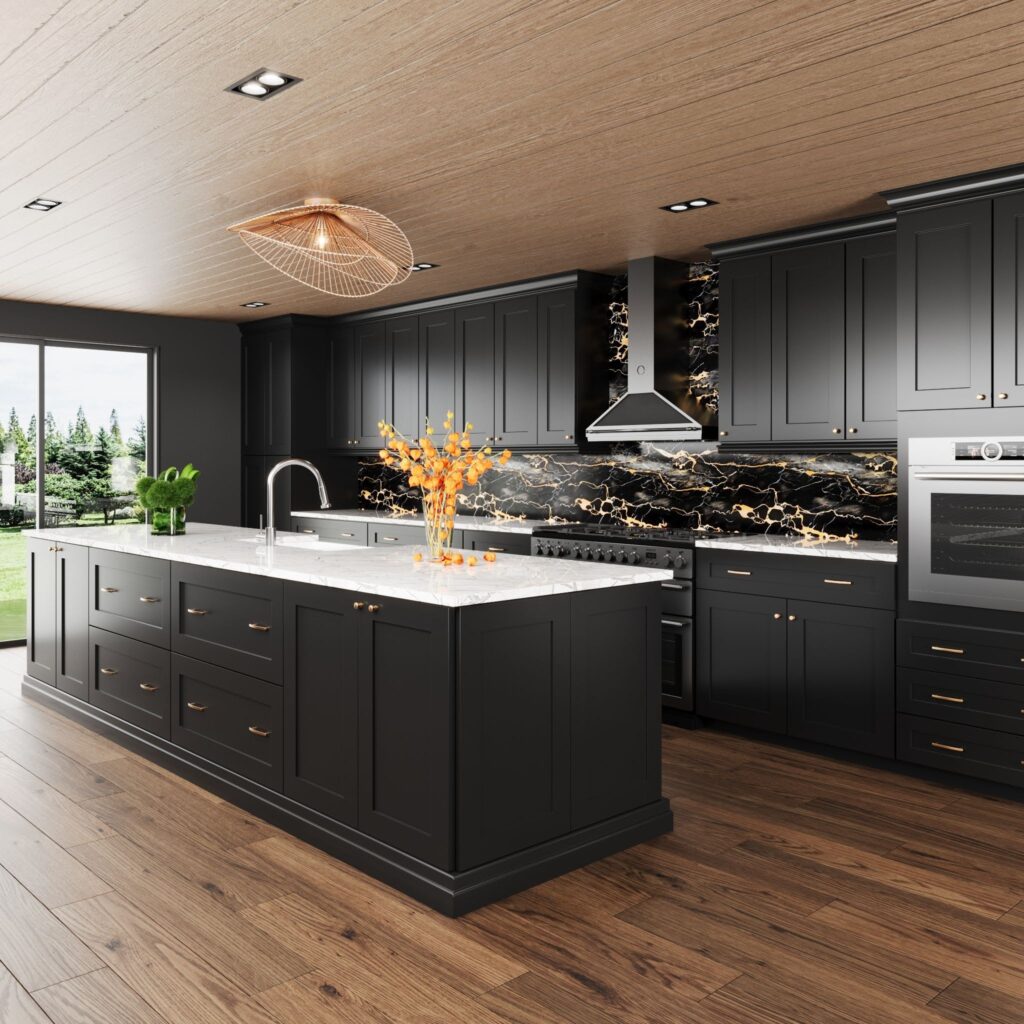
Its survival is not luck. It comes from the opposite of what dooms the trends, restraint. There is nothing in a shaker door making a statement about its era. The profile is quiet, almost neutral, which is precisely why it reads as correct in a 1900s farmhouse, a 1980s traditional home, and a stark modern kitchen alike. It carries whatever finish and hardware you give it without arguing, so it absorbs the decade’s mood instead of being trapped by it. The most reliable evidence that something will endure is that it already has, and by that test the shaker has no real rival among cabinet styles. This is why it remains the safest choice for a kitchen meant to last, and why it is offered in nearly every finish: a black shaker cabinet carries the same enduring profile as a painted white or a natural oak, letting a homeowner pick the lasting form without paying custom prices for a long-term investment.
How to Choose a Timeless Kitchen That Won’t Date
If dated kitchens come from committing trends to permanent surfaces, the rule for avoiding it writes itself: keep the permanent things neutral and proven, and let the trends live on the things you can cheaply change.
The permanent, expensive, hard-to-change elements, the cabinets above all, should be the quiet, time-tested choices: a shaker or similarly restrained door, in a finish that has already proven it lasts. White, soft off-whites, light to mid grays, and natural wood tones have demonstrated the same staying power as the shaker form itself, while a bold cabinet color carries the highest dating risk precisely because the cabinets are so large and so permanent. That is where to be conservative.
The fashion, then, goes everywhere it can be undone in an afternoon: wall paint, cabinet hardware, light fixtures, the faucet, bar stools, textiles, and accessories. Love a trend color? Put it on the walls, where a fresh coat erases it in a weekend. Want a fashionable metal finish? Choose it in the knobs and pulls, which unscrew. Expressed there, a trend costs almost nothing to enjoy now and almost nothing to retire later, while the kitchen underneath stays timeless.
Frequently asked questions about timeless kitchen design
What kitchen design actually lasts? One built on restraint and proven elements: a quiet, time-tested cabinet style like the shaker in a neutral finish, with any trendiness confined to easily changed pieces. Boldness on the permanent surfaces is what dates a kitchen.
Will shaker cabinets ever go out of style? History strongly suggests not. The shaker has stayed in continuous demand for over a century across radically different design eras, because nothing about its restrained profile is tied to a particular moment.
What cabinet colors are safest long-term? White, soft off-whites, light to mid grays, and natural wood tones have all proven their longevity. Because cabinets are the largest and most permanent element, a bold color there carries the greatest risk of dating the room.
Does this mean I can’t follow any trends? Not at all. Put trends where they are cheap to change, paint, hardware, fixtures, accessories. The discipline is only about keeping the expensive, permanent elements neutral and proven.
What dates a kitchen the fastest? A bold, of-the-moment choice committed to a large permanent surface, especially cabinet color or style. When the trend passes, that surface keeps wearing the decade it came from, and replacing it is costly.
The history of kitchen design is really one long demonstration of a single lesson: trends belong on the surfaces you can change in a weekend, never on the ones you will live with for twenty years. Put a restrained, proven cabinet on those permanent surfaces, save the fashion for the paint and the hardware, and your kitchen simply opts out of the cycle that dated all the others.