
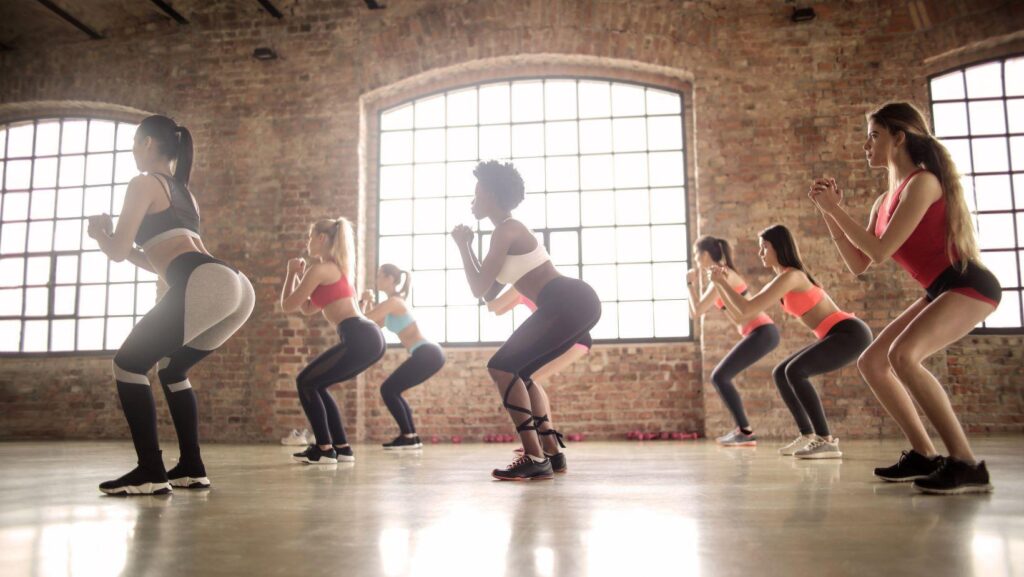
If you’re doing endless fire hydrants, donkey kicks, and “booty burn” videos but your glutes still don’t feel stronger, the problem is probably vague advice, not lack of effort. Many women train hard, feel sore, and still don’t build the shape, control, or strength they want. The fix is usually better exercise selection, better setup, and progressive overload. If you want stronger glutes that support your lifts, posture, running, and physique, the basics work – you just have to do them well.
Why Strong Glutes Are a Game Changer
A lot of women start glute training for aesthetic reasons. That’s normal. Then something else happens: stairs feel easier, split squats feel less chaotic, and your lower body starts moving with more control. Strong glutes can support better hip extension, pelvic control, and lower-body stability. When they do their job, other areas do not have to compensate as much. When they do not, people often try to force progress with more squats, more classes, more reps, and more fatigue.
This is where good equipment can help, especially for home training. Simple tools like dumbbells, kettlebells, and glute resistance bands for women can add structure to lower-body workouts without requiring a full gym setup. Bands are especially useful for warm-ups, glute activation, lateral work, and controlled resistance exercises.
So yes, wanting better glutes is fine. But the bigger win is building a stronger foundation. That’s what makes training feel productive instead of random.
A Quick Look at Your Glute Anatomy
Your glutes are not one muscle. They are a small team, and each part has a different job.
The gluteus maximus is the big engine. It is heavily involved in hip extension, which shows up in hip thrusts, bridges, deadlifts, and any movement where you drive the hips forward.
The gluteus medius works more like a stabilizer. It helps control the pelvis and plays a major role when you are on one leg, changing direction, or keeping your knees from collapsing inward.
The gluteus minimus sits underneath and helps with smaller control work. It does not get the spotlight, but it matters for hip stability and cleaner movement.
This is why one exercise will not cover everything. If you only squat, you may build lower-body strength, but that does not automatically mean you are getting the best glute stimulus. If you only do light band burnout work, you may feel the outer glutes, but you may miss the heavier loading that drives more size and strength.
A good glute plan usually includes:
- a heavy hip extension movement like a hip thrust or Romanian deadlift;
- a unilateral movement like a Bulgarian split squat or lunge;
- a banded abduction or external rotation drill for side-glute control.
Once you understand those roles, exercise choice stops feeling random. You are not just chasing a burn. You are training a system.
The Best Glute Exercises for Real Strength
The internet loves giant exercise lists. Most people do not need twenty glute exercises. They need a short list of movements they can improve over time.
Hip thrusts
If your goal is glute growth, the hip thrust deserves serious attention. It directly trains hip extension and lets you load the glutes in a strong, stable position.
To make hip thrusts work:
- set your upper back on a bench so you are supported;
- plant your feet so your shins are close to vertical at the top;
- drive through the heel and midfoot;
- lift until your shoulders, hips, and knees form a straight line;
- pause briefly at the top, then lower with control.
Practical rule: if you feel hip thrusts mostly in your low back, you may be overextending at the top instead of finishing with your glutes.
Romanian deadlifts
Romanian deadlifts train the glutes in a stretched position and teach you to hinge properly. That stretch matters, and it exposes bad habits fast.
Keep the weights close to your legs, soften the knees, push the hips back, and stop when you lose your neutral position or the stretch shifts away from the hamstrings and glutes. Then stand by driving the floor away and bringing the hips through.
Romanian deadlifts reward control. If you rush the lowering phase or reach too far with the weights, your back often takes over. If you hinge cleanly, the glutes and hamstrings do the job.
Bulgarian split squats
Bulgarian split squats are hard, but they are worth keeping.
Take enough space from the bench so the front leg can work. Lean slightly forward, keep the front foot planted, and control the descent instead of dropping into the bottom position. Research on Bulgarian split squat variations suggests that trunk position can change how the posterior chain works during the movement, so a small forward torso angle can help shift more work toward the glutes without turning the exercise into a collapse.
This exercise is also useful for fixing side-to-side differences. Most people have one leg that feels stronger or more stable than the other, even if they have not noticed it yet.
Banded abduction work
Banded work is not fluff when it is used correctly. It is just not the whole program.
Exercises like banded bridges, lateral walks, kickbacks, clamshells, and seated abductions can help train the side glutes, improve control, and make warm-ups more effective. They are especially practical for home workouts because they add resistance without taking up space.
The trade-off is simple: bands are great for tension and control, but if you never make the work harder over time, your body has no reason to adapt.
Putting It All Together: Your Weekly Glute Plan
The best plan is usually the one you can recover from and repeat. For many women, two to three focused glute sessions per week is a realistic starting point.
Beginner
Train glutes twice per week.
Use:
- glute bridge;
- Romanian deadlift;
- split squat;
- band abduction.
Do 2–3 sets of 8–12 reps for most movements.
Intermediate
Train glutes two to three times per week.
Use:
- hip thrust;
- Romanian deadlift;
- Bulgarian split squat;
- band kickback or lateral walk.
Do 3–4 sets of 6–10 reps on the main lift and 2–3 sets of 8–12 reps on accessories.
Advanced
Train glutes up to three times per week if recovery is solid.
Use:
- hip thrust;
- Romanian deadlift;
- Bulgarian split squat;
- loaded lunge;
- banded abduction work.
Keep the main lifts challenging and use accessories for control, volume, and weak points.
How to Progress Without Overcomplicating It
You do not need a complicated spreadsheet. You need one clear target each week.
You can progress by:
- adding a little more weight;
- adding reps within your target range;
- improving pauses and tempo;
- using stronger band tension;
- increasing range of motion;
- making unilateral work more controlled.
If you repeat the same glute workout for months with the same resistance, reps, and effort, you are practicing. You are not progressing.
Choosing the Right Gear for Your Glute Workouts
You can build a lot with bodyweight at the beginning. After that, equipment matters because tension matters.
For home glute training, a simple setup works well:
- fabric loop bands;
- a pair of dumbbells or kettlebells;
- a stable bench, box, or couch edge for thrusts and split squats.
Fabric loop bands are especially useful for abduction, external rotation, bridges, and lateral work. They tend to stay in place better than slick latex bands and are more comfortable for repeated lower-body sets.
Dumbbells or kettlebells give you real loading options for Romanian deadlifts and split squats. A stable bench or box gives you better setup options for hip thrusts and Bulgarian split squats.
Bands are not magic, but they are useful. They help where many people lose tension: pushing the knees out, resisting collapse, and feeling the side glutes work. The gear should support the movement. It should not become the whole identity of the workout.