
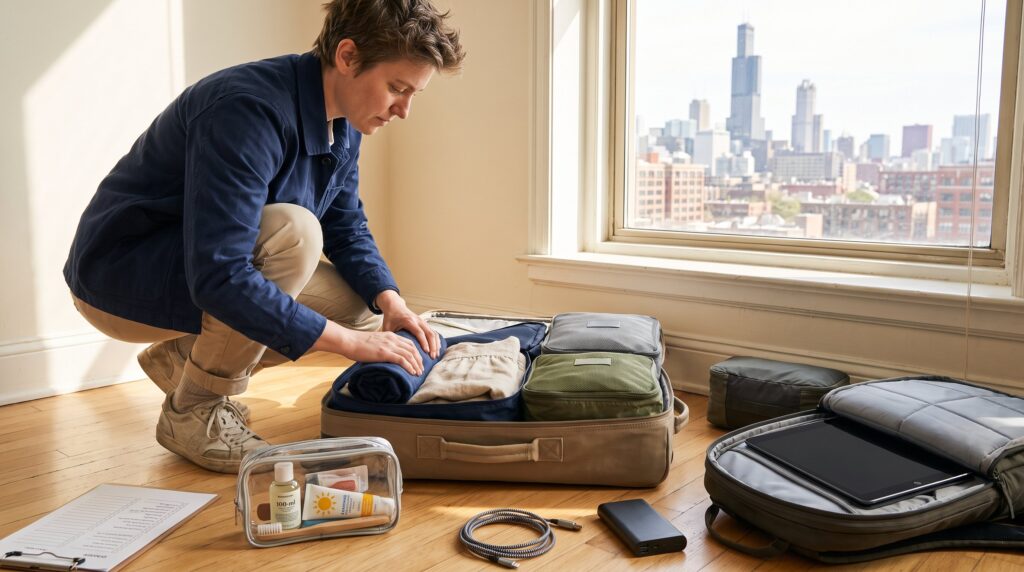
Practical Packing Tips for Traveling Light start this guide with a clear promise: carry-on only travel can cut costs, reduce stress, and make moving through airports and cities smoother. This article shows exact decisions travelers can make, from choosing the right bag to building a 5–7 day capsule wardrobe, so they pack fewer items but keep more options. It focuses on safety, savings, and sanity: fewer lost bags, no checked fees, and simpler days on the road. Readers will get concrete, repeatable tactics and a short checklist to leave home confident and light.
Practical Packing Tips for Traveling Light
- Traveling light with just carry-on luggage reduces costs, stress, and the risk of lost bags, improving overall trip enjoyment.
- Choose a soft-sided carry-on bag that fits airline size rules and a compact daypack with secure compartments to streamline your travel.
- Build a versatile 5–7 day capsule wardrobe using neutral and accent colors with quick-dry fabrics to maximize outfit options and minimize load.
- Use rolling for soft items and folding for structured pieces, and organize clothes in packing cubes to save space and stay organized.
- Limit toiletries and tech to essentials in refillable containers, and pack small liquids in clear zip bags for easy security checks.
- Plan laundry during your trip, limit shoes to two versatile pairs, and use compression techniques to handle bulky items efficiently.
Why Traveling Light Makes Trips Easier (Safety, Savings, And Sanity)
Traveling light reduces risk, saves money, and lowers stress. With carry-on only, travelers keep their bag with them and avoid the 2–3% chance of delayed luggage that still happens at busy hubs. It also removes most checked‑bag fees and shortens time at reclaim areas, saving both cash and 20–40 minutes per flight connection on average. Moving through crowded streets and stairs becomes easier when a single bag weighs 7–10 kg rather than 20–25 kg: that freedom often makes a trip more enjoyable.
A practical detail: pick clothes that dry in 6–12 hours so laundry stops being a schedule problem. Travelers with anxiety report that fewer items to track reduces decision fatigue and improves sleep on the road. For those wanting a compact reference, the Mayo Clinic packing checklist shows how essentials alone can live in a small bag and supports light travel planning. This matters for safety, too: fewer items left unattended means less chance of theft or misplacement in transit.
How To Choose The Right Carry‑On And Daypack For Your Trip
Choose a carry‑on that meets airline size and weight rules for the routes you’ll use. Start by checking the carrier’s policy and aim for a soft-sided bag 55 x 35 x 20 cm or smaller for international flights. Soft duffels and backpacks compress into tight spaces and fit under seats when needed. Prefer one with padded straps and a front pocket for documents.
Select a daypack with a secure zippered pocket and at least one compartment for a water bottle and electronics. For photographers or parents, a 20–25L daypack handles essentials: commuters often prefer 13–18L. Pack heavier items low and close to the body to keep balance when walking. For inspiration on balanced choices and travel style, readers can compare methods in the article about how to pack, travel, style, smart, sacrificing, sacrificing style.
Create A Versatile Capsule Wardrobe: Plan Outfits, Not Pieces
A capsule wardrobe reduces choice and maximizes outfit options. Start by planning outfits for 5–7 days rather than counting individual garments. Pick one or two neutral base colors (navy, black, or beige) and two accent colors. Each top should match every bottom so every combination works. For example: three tops + two bottoms + one jacket + one dress = seven outfit possibilities when layered.
Choose quick‑dry fabrics and pieces that transition from day to night. Travelers who repeat outfits on longer trips reported less packing anxiety and cleaner laundry routines. Bring one multi‑purpose jacket that resists rain and folds small. Limit accessories: a single belt and one pair of lightweight earrings do more than two bulky items. If books are part of the plan, pack fewer paperbacks or use an e‑reader: for tips on handling paper items during moves, see the piece about how to pack books.
Packing Techniques: Roll, Fold, And Use Packing Cubes Effectively
Start with a rule: soft items roll, structured items fold. Roll T‑shirts, underwear, and thin athletic wear to save space and reduce wrinkles. Fold blazers, dresses with seams, and dress shirts along natural lines to keep shape. Use two to three packing cubes: one for tops, one for bottoms and underwear, and one for tech or outerwear.
Compress cubes by filling gaps around them with socks and small items. Place heavier cubes near the wheels or along the spine of a backpack to stabilize the bag. For a 7‑day trip the recommended setup is: Cube A (3 tops, 2 bottoms, underwear), Cube B (jacket, one dress, sleepwear), Cube C (chargers, toiletries, meds). This method saves minutes every morning and prevents digging through the entire bag. For more protective techniques when packing fragile items, the article about packing hacks shows specific padding ideas that also work for delicate travel gear.
Minimize Toiletries, Tech, And Extras Without Feeling Unprepared
Bring only essentials and decant liquids into refillable travel bottles following 100‑ml rules for carry‑on. A compact toiletry kit should include: multipurpose soap, travel sunscreen (30 ml), minimal skincare, a toothbrush, and a small first‑aid strip kit. Those who trimmed toiletries to five items reported saving 400–600 g in bag weight.
For tech, bring one smartphone, one charger, and a single multi‑port power bank. Replace multiple single‑purpose cables with a braided 3‑in‑1 cable. If a laptop is optional, swap it for a tablet to save 0.5–1.2 kg. When deciding what to leave, travelers can consult the site overview to align packing with broader health and lifestyle goals: see the short site overview for context on minimal living and wellness while traveling.
Be honest about redundancies: if two creams do the same job, bring the one that’s refillable. A final tip: store small liquids in a clear zip bag to speed security checks.
Smart Strategies For Laundry, Shoes, And Transporting Bulky Items
Do laundry mid‑trip to cut the number of garments needed. Many travelers use local laundromats or hotel laundry once every 4–5 days: quick‑dry fabrics wash and dry in a sink within 6–12 hours. Pack a small soap bar and a collapsible sink bag for hand‑washing a few items on travel days.
Limit shoes to 1–2 pairs. Wear the bulkiest pair in transit and pack the other. Shoe stuffing with socks and chargers saves space and keeps shoes’ shape. For bulky items like a down jacket or hiking boots, use a compression cube or wear the jacket on the plane: compressing a jacket can reduce its volume by 40–50%.
Real mistake: one traveler packed three pairs of shoes for a week and still wore only one, that wasted 2.2 kg. Plan footwear by activity and pick multipurpose pairs (waterproof sneakers and a compact dress shoe). For fragile items and padding methods that also apply to footwear, review the practical packing hacks.
Conclusion: A Simple Pre‑Trip Checklist To Pack Light With Confidence
Start packing earlier, confirm bag rules, and use a 5–7 day capsule plan. Wear the heaviest shoes, decant toiletries, and use two to three packing cubes. Leave about 10% space for flexibility or souvenirs. These steps shave weight, reduce stress, and keep travel fluid.
Final quick checklist: confirm airline size, pick capsule wardrobe, limit to two shoes, decant liquids, pack cubes, and plan laundry. For broader wellness and travel habits that support light packing, GoodNever publishes ongoing guidance for healthy, organized travel and daily life.