
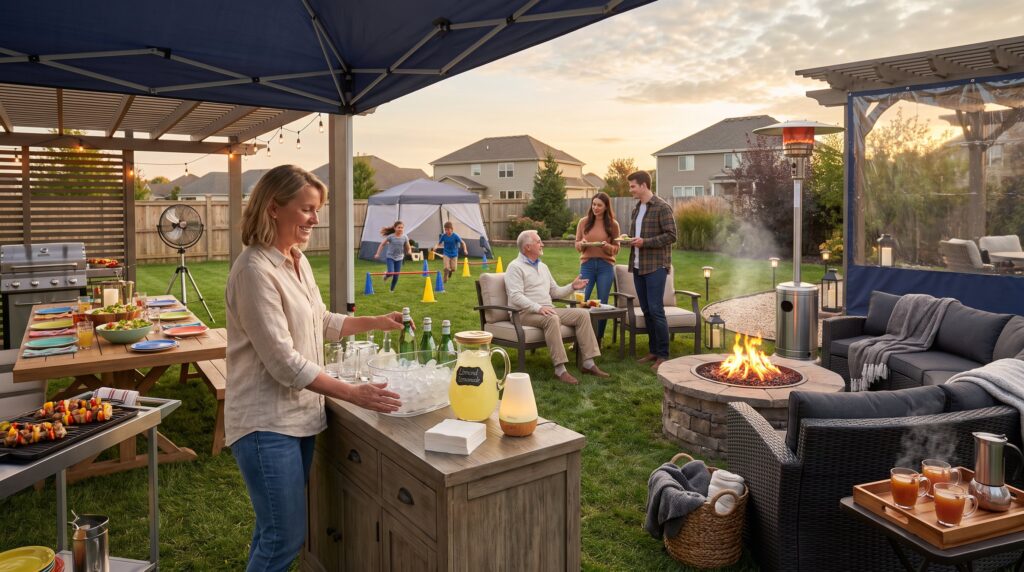
How to plan outdoor entertaining for different seasons begins with three clear decisions: the event goal, who will attend, and where it will happen. This short planning habit prevents last‑minute scrambling and makes comfort the priority. The guide that follows gives specific, season‑appropriate tactics, timing, shade, food safety, insect control, heating, lighting, and weatherproofing, so hosts can create memorable gatherings without wasted effort. Each section opens with a crisp recommendation, adds concrete steps, and notes common mistakes hosts make and how to avoid them.
Puntos clave
- Planificar eventos al aire libre debe comenzar definiendo claramente el objetivo, los invitados y el lugar para garantizar comodidad y organización.
- En primavera y verano, programa la fiesta tras las horas más calurosas, usando capas de sombra y controlando la seguridad alimentaria e insectos activamente.
- Para otoño e invierno, prioriza el calor radiante con chimeneas y calentadores eléctricos, además de iluminación estratificada para crear ambiente.
- Selecciona menús adecuados a la temporada: platos fríos y ligeros en verano y comidas calientes y energéticas en invierno para mantener a los invitados confortables y activos.
- Considera siempre un plan B para el clima, usando zonas cubiertas, cortavientos y equipo resistente para proteger a los invitados y la comida.
- Una buena planificación estacional evita errores comunes como espacios sobrecargados, calefacción insuficiente y riesgos de contaminación alimentaria.
A Simple Seasonal Planning Framework: Goals, Guests, And Site Selection
Answer up front: define the event goal, estimate guest needs, and pick the right site. That one choice resolves most later decisions.
Goals: Choose one primary purpose, casual mingling, sit‑down meal, or activity‑focused event. For example, a two‑hour backyard wine tasting needs compact seating and side tables: a kids’ obstacle course needs open lawn and a shaded food area. Match furniture and equipment to the goal: a dining event needs an outdoor table and buffet zone: an activity event needs clear pathways and a gear staging area. A common mistake is overfurnishing a space meant for movement.
Guests: Tally expected guests, then add 15% for last‑minute drop‑ins. Note ages and mobility, if 40% of attendees are over 65, prioritize firm seating and short walks from parking. Size seating and serving stations to flow: one seat per guest plus 20% standing room: one drink station per 20 guests. Hosts who underestimate group size create bottlenecks at food and drink areas.
Site selection: Pick patio, deck, lawn, or covered porch based on typical weather and the event goal. Choose zones for cooking, dining, and conversation. For example, a shaded deck can host dining while a lawn holds lawn games. When wind or rain is plausible, select a covered area or plan for pop‑up canopies. To visualize layouts, hosts can reference simple zone ideas like a modern deck layout that separates dining and lounge areas.
Weather planning: Check average seasonal conditions and pick a close backup for wind, rain, or heat. If the event is in a shoulder season, reserve an indoor fallback or rent sidewalls and heaters. For broader lifestyle context on planning gatherings and family routines, hosts may link practical habits back to the site’s lifestyle content with a short reference to everyday lifestyle advice. Practical warning: never assume still air, fans and wind screens both affect comfort and insect presence.
Spring And Summer Entertaining: Timing, Shade, Food, And Bugs
Direct recommendation: schedule for late afternoon into evening, prioritize cooling and food safety, and plan active insect control.
Timing: Start events after the hottest hours, around 4–6pm in summer, to use natural cooling and extend daylight with lamps. In spring, avoid late evenings if temperatures dip below comfortable levels. A timing tip: stagger food service by offering an early appetizer spread for late‑arriving guests so active games and dining don’t compete.
Shade and cooling: Provide layered shade: umbrellas for small zones, a pergola for fixed shade, and pop‑up canopies for temporary needs. Position seating to face away from low sun angles and use portable fans near dining tables: a fan reduces perceived temperature and can drop mosquito activity. Prioritize shaded walkways over squeezing in more chairs, guests will move toward comfort.
Food and drinks: Serve chilled salads, grilled lean proteins, and fruit‑forward desserts that travel well. Use insulated drink stations with at least two ice changes for events over two hours to prevent warmed drinks and reduce bacteria risk. Offer non‑alcoholic and low‑sugar options: one good rule: provide one liter of non‑alcoholic beverage per guest for a three‑hour warm‑weather event. A practical mistake hosts make is placing perishable dishes in direct sun: store cold items on ice and rotate them back to refrigeration when possible.
Bugs: Eliminate standing water, set up citronella or oil diffusers, and put plug‑in fans around dining zones, fans interrupt mosquito flight. For plant‑heavy yards, use targeted repellents and offer disposable wipes or wristbands near the entry. If allergies are a concern, consult expert guidance on preparing for outdoors during pollen season: a concise resource on allergy preparation can help hosts adapt menus and seating to sensitive guests allergy guidance.
Related site resources: hosts building long‑term outdoor routines should review practical hosting lists like the year‑round tips on hosting outdoors.
Fall And Winter Entertaining: Warmth, Lighting, Weatherproofing, And Menus
Direct recommendation: prioritize radiant heat and layered lighting, and choose menus that keep people moving toward warmth and conversation.
Warmth: Use a combination of fire features and electric heaters. A fire pit with seating radiates heat and becomes a focal point: complement it with portable patio heaters near dining to keep plates and hands warm. Supply 2–3 blankets per seating cluster and keep extras in a covered basket: note that a 5‑kW infrared heater warms an area of roughly 10–15 square meters effectively. Safety note: place heaters on stable surfaces and keep combustibles 1.5 meters away.
Lighting: Start with path lights and add string lights above circulation routes to reduce glare and create depth. Lanterns on tables provide soft pools of light for faces and plates without washing out warmth. Early darkness means hosts should test battery levels for lanterns and have spare bulbs: a practical slip is relying on phone flashlights alone.
Weatherproofing: Prefer covered patios, add wind‑blocking screens, and use weather‑resistant furniture cushions stored in waterproof bins. Sidewalls on pergolas and clear vinyl curtains on canopies keep rain and wind at bay while preserving views. If a storm is forecast, move perishables indoors and protect electronics in zippered cases.
Menus: Serve soups, casseroles, and hot dips that can be portioned and kept warm on chafing dishes. Offer mulled cider, hot tea varieties, and a hot chocolate bar with small toppings to create a memorable sensory moment. A practical metric: plan for 300–400 calories per guest per hour for cold‑weather gatherings where guests will stay active and eat multiple warm small plates.
Design trends and gear: consider current outdoor heating and table trends when choosing equipment: for inspiration on fire features and contemporary styles, hosts can review recent design analysis on fire table trends. For long‑term landscaping integration that supports seasonal use, explore ideas on blending structures.
Conclusion
Clear takeaway: seasonal success comes from one early decision that defines everything, goal, guests, and site. Small investments, correct shade in summer, quality heaters in winter, layered lighting, and smart menus, deliver outsized comfort gains. Hosts who plan with these specifics avoid common traps: overcrowded layouts, underpowered heating, and food safety errors. Use the framework here, adapt to local climate and guest needs, and link seasonal plans to broader lifestyle habits for reliable results.