
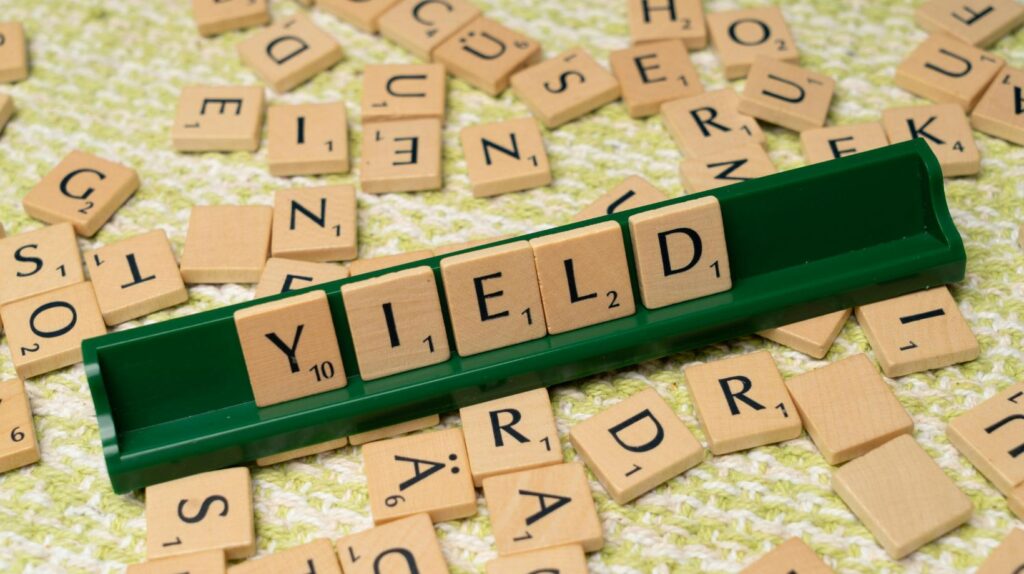
The 15 Scrabble Board Game Rules are the essential guidelines for playing the classic word game correctly and competitively. The Scrabble rules and regulations ensure a fair playing field for all participants by standardizing word formation and scoring procedures. Players must adhere to specific tile placement patterns to build valid connections across the board. Knowledge of the 5 rules of Scrabble helps players maximize points through strategic use of bonus squares and specialized tile combinations. Mastering the foundational rules of Scrabble improves the gaming experience for casual and professional players alike. Find the highest unscramble words by using the Word Finder tool.
15 Scrabble Board Game Rules are listed below.
- Tile Rack: The tile rack holds a player’s seven current letter pieces away from the view of opponents. It allows players to organize their letters and visualize potential word combinations efficiently.
- Center Square: The center square is the starting point for the very first word played during a match. The specific space acts as a double word score bonus for the opening player.
- Word Connection: New words must attach to at least one existing letter already placed on the board. The connection creates a continuous network of interlocking terms throughout the game.
- Straight Placement: Letters must form words in a single horizontal or vertical line across the grid. Diagonal placements are strictly prohibited within standard gameplay.
- Single-Use Multipliers: Bonus squares (Double Letter or Triple Word) apply only to the first player who lands a tile on them. Subsequent words utilizing the same letters do not receive the multiplier benefit again.
- Dictionary Validity: Players use a pre-selected dictionary to verify the legitimacy of words challenged during a turn. The regulation maintains fairness and prevents the use of made-up vocabulary.
- Seven Tile Bonus (Bingo): Using all seven tiles from the rack in one single turn earns a massive fifty-point bonus. The achievement impacts the total score and frequently determines the winner.
- No Proper Nouns: Words capitalized in a dictionary (names of people or places) are disallowed. The restriction keeps the vocabulary focused on common nouns, verbs, and adjectives.
- No Abbreviations: Shortened forms of words (appt or dept) are ineligible for point scoring. Players must spell out the complete word to receive credit for the letters used.
- Blank Tiles: Blank tiles act as any letter of the player’s choice but carry zero point value. The letter represented remains the same for the duration of the match once played.
- Tile Exchange: A player chooses to swap any number of tiles from their rack instead of playing a word. The action requires the presence of at least seven tiles in the bag to remain valid.
- Passing a Turn: Participants elect to skip their turn without playing or exchanging any letters. Three consecutive passes by all players signal the immediate end of the game.
- Score Tracking: Each player records their points after every turn by summing the values of letters in new words. Multiplier squares are calculated first before adding any flat bonuses, like a bingo.
- End-Game Trigger: The game concludes when one player uses all their tiles and the bag is empty. Play stops when no more valid moves are possible for any participant.
- Final Score Adjustment: Players subtract the value of their remaining unplayed tiles from their final accumulated points. The winner gains the sum of all tiles left on opponents’ racks.
1. Tile Rack
The tile rack is a wooden or plastic holder to keep seven letters hidden from other players. The tile rack provides a private space for arranging characters to unscramble words into high-scoring plays. Proper organization on the rack helps players spot prefixes and suffixes quickly. Each player receives one rack at the beginning of the match. For example, placing the letters A, B, C, D, E, F, and G in alphabetical order and moving the letter S to the end to visualize a plural noun.
2. Center Square
The center square is the star-marked coordinate located in the middle of the game board. Every opening move must cover the specific spot to initiate the crossword grid. The requirement ensures the game starts from a central point rather than a corner. It provides a double word score for the player who goes first. For example, playing the word HELLO horizontally across the star. Placing the word CAT vertically so the middle letter T sits on the center square is another example.
3. Word Connection
Word connection is the requirement that every new play must link to an existing tile on the board. The mechanism creates the characteristic interlocking pattern of a crossword puzzle. Players utilize letters already on the grid to branch out into new areas. All letters touching each other form valid words in every direction. For example, adding the letters O and T to an existing P to make POT. Placing the word DOG perpendicular to the letter G in the word GOAT is another example.
4. Straight Placement
Straight placement dictates that all letters played in a single turn must lie in one row or column. Players do not move tiles diagonally or create jagged shapes on the board. The restriction maintains a clean and readable grid for scoring purposes. Letters must form a continuous line without gaps between existing tiles. For example, spelling TRUCK in a straight horizontal line. Spelling HOUSE in a straight vertical column is another example.
5. Single-Use Multipliers
Single-use multipliers are bonus squares that reward players for occupying specific coordinates for the first time. Colored spots include double letter, triple letter, double word, and triple word bonuses. The point increase applies only during the turn when the tile is first placed on the square. Future words using that tile only count the face value of the letter. For example, placing the letter Z on a triple letter square for thirty points. Landing the word QUICK on a double word score to double the total word value is another example.
6. Dictionary Validity
Dictionary validity refers to the official list of acceptable terms used to settle disputes during gameplay. Players agree upon a specific lexicon (the Official Scrabble Players Dictionary) before starting. Words found in the dictionary are permitted, while slang or foreign words face exclusion. The regulation maintains fairness and prevents the use of made-up vocabulary. For example, checking the word QI to confirm its presence in the Scrabble dictionary. A second example is challenging the word XJGH to prove it is not a valid entry.
7. Seven-Tile Bonus (Bingo)
A seven-tile bonus (Bingo) occurs when a player successfully uses all seven letters from their rack in a single turn. The move adds an extra fifty points to the score of the word played. It is the most effective way to gain a significant lead over opponents. Finding a seven-letter word requires careful planning and a large vocabulary. For example, playing the word EXAMPLE using every tile on the rack. Another example is placing the word LETTERS to receive the fifty-point bingo bonus.
8. No Proper Nouns
The prohibition of proper nouns prevents the use of capitalized names, places, or brands. Scrabble players focus on common vocabulary that appears in standard dictionary definitions. The limitation ensures the game stays grounded in general language rather than obscure personal names. London or John is ineligible for points. For example, a forbidden word is the name PARIS when referring to the city. A second example is the brand name SONY, which is not a valid common noun.
9. No Abbreviations
No abbreviations means that shortened forms of words are not allowed on the board. Each played term must be a complete, stand-alone word found in the dictionary. The rule forces players to find full spellings instead of relying on common shorthand. Everyday acronyms fail to meet the requirement. For example, an invalid abbreviation is TV for television and the word PROF for professor, which is regularly excluded from the official Scrabble rules.
10. Blank Tiles
Blank tiles are two special pieces in the set that contain no letters or point values. A player assigns a specific letter to the blank tile upon placing it on the board. The tile retains that chosen letter identity for the remainder of the game. It helps players complete difficult words or achieve a bingo bonus. For example, using a blank tile as the letter Q to spell the word QUIET. A second example is designating the blank as an E to complete the word APPLE.
11. Tile Exchange
Tile exchange is an alternative to playing a word, where a player trades unwanted letters for new ones from the bag. The player places their discarded tiles face down and draws the same number of replacements. The action consumes the player’s entire turn and results in zero points. It is a strategic move used to fix a rack full of vowels or difficult consonants. For example, exchanging three vowels for three new random tiles. Another example is swapping the letters V and X when no playable spots exist.
12. Passing a Turn
Passing a turn is the choice to skip a move without playing tiles or exchanging them. The decision occurs when a player possesses no valid words, and the bag is empty. Consecutive passes by all players lead to the immediate conclusion of the match. Scoring remains unchanged for the specific round where a pass occurs. For example, saying “pass” when the board is too crowded to add letters. A second example is passing the turn to wait for a better opening from an opponent.
13. Score Tracking
Score tracking involves recording the points earned from every word played during each round. One player acts as the scorekeeper to maintain an accurate running total for all participants. Points come from the sum of letter values and applicable board multipliers. Accurate arithmetic prevents disputes at the end of the competition. For example, writing down twelve points after playing the word CAT. Another example is adding fifty points to a score after achieving a seven tile bingo.
14. End-Game Trigger
The endgame trigger is the specific condition that stops all play and initiates final scoring. The occurrence happens most when the letter bag is empty, and one player uses their last tile. Another trigger is the occurrence of six consecutive turns with zero scores or three consecutive passes by all players. The match concludes immediately once these conditions are met. For example, the bag becomes empty at the same time a player places their final letter S. A second example is all players passing their turns because the board is full.
15. Final Score Adjustment
Final score adjustment occurs at the conclusion of the match to account for unplayed letters. Each participant totals the values of tiles left on their rack and subtracts that amount from their score. The player who emptied their rack receives a bonus equal to the sum of all opponents’ remaining tiles. Accuracy in the final calculation is vital for determining the true winner of a close game. For example, a player loses ten points because they held the letter Q at the end. Another example is the winner gaining fifteen points from the combined tiles of two other players as part of the 5 rules of Scrabble.
How to Play Scrabble?
To play Scrabble, there are six steps to follow. First, place all one hundred tiles inside the cloth bag and mix them thoroughly. Second, draw seven tiles each and place them on the personal tile racks. Third, decide the starting player by drawing for the letter closest to A. Fourth, place the first word in the center square to begin the grid formation. Fifth, draw new tiles from the bag after every turn to maintain a rack of seven. Lastly, continue playing until the bag is empty or no more moves are possible to determine the winner of the Scrabble game.
How does Scrabble Scoring Work?
Scrabble scoring works by calculating the player’s point values of letters used to form words on the game board. Every letter tile features a small number in the bottom right corner representing its specific point worth. Players add these numbers together for every new word created during a single turn. Bonus squares on the grid (Double Letter or Triple Word scores) multiply these values significantly. A “Double Letter” square only multiplies the tile placed on it. A “Double Word” square doubles the entire sum of the word. Multiple bonuses stack if a word covers more than one special square simultaneously. Achieving a bingo by using all seven rack tiles adds a flat fifty-point premium to the total. The complex system rewards vocabulary depth and strategic placement on the board. Understanding the nuances of these 5 rules of Scrabble scoring helps players maximize their competitive advantage.
Are Abbreviations Allowed in Scrabble?
No, abbreviations are not allowed in Scrabble according to the official tournament guidelines and standard play. The game requires players to use complete words that appear as main entries in the chosen dictionary. Shortened forms (“apt” for apartment or “mgr” for manager) are ineligible for points on the board. The restriction ensures that the competition focuses on full linguistic knowledge rather than common shorthand. Some words that started as abbreviations but became standalone words (“bus” or “taxi”) are exceptions. Players verify the status of such words in the official lexicon before placement. Following the established Scrabble rules regarding word types maintains a high level of fair play for everyone.
Are Acronyms Allowed in Scrabble?
No, acronyms are not allowed in Scrabble because they function as proper names or technical shorthand. Dictionaries categorize acronyms (NASA or UNESCO) as proper nouns, which are strictly forbidden. Words formed from the initial letters of other words only become legal if they are accepted as common nouns. For example, “laser” and “scuba” are valid because they have transitioned into everyday language. Standard gameplay excludes any term that requires capitalization in a dictionary. Players must consult the specific word list used for their match to confirm eligibility. Sticking to the core rules of Scrabble prevents confusion regarding specialized terminology and ensures a balanced game environment.
How to Score in Scrabble?
To score in Scrabble, there are six steps to follow. First, sum the point values printed on each letter tile used in the new word. Second, apply any letter multipliers (Double Letter or Triple Letter) to the specific tiles landing on squares. Third, total the values of all letters in the word after including the individual tile bonuses. Fourth, apply word multipliers (Double Word or Triple Word) scores to the entire sum calculated in the previous step. Fifth, add fifty points if the move utilized all seven tiles from the rack. Lastly, record the final number on the score sheet to track progress throughout the game of Scrabble.
Can Using UnscrambleX help with Scoring in Scrabble?
Yes, using UnscrambleX helps with scoring in Scrabble by identifying the highest value words available from a set of letters. The tool processes a player’s current rack and suggests various word combinations ranked by their potential points. It assists in finding complex words or seven-letter bingos that go unnoticed. The resource is an excellent training aid for casual enthusiasts. Players use it to discover how different letter arrangements interact with board bonuses. Utilizing such a tool allows players to unscramble words more effectively and understand the strategic depth of the game.