

Parenting changes many parts of life, including how people see themselves. Sleep disruption, hormonal shifts, stress, and long workdays often show first on the face. Volume loss under the eyes can create a tired look. Flattened cheeks and softer jawlines may appear earlier than expected. For parents who want to address these changes without surgery, dermal fillers offer a medical option focused on restoring facial contours rather than altering identity.
Facial aging follows predictable anatomical patterns. Bone density decreases gradually. Fat pads shift downward. Collagen production slows after the late twenties and declines more rapidly in the forties. These structural changes influence how light reflects off the face and how shadows form. As midface volume decreases, nasolabial folds appear deeper. When temples hollow, the upper face can look narrower. Dermal fillers were developed to address these structural shifts with precision.
Why Volume Loss Happens Earlier Than Many Parents Expect
Pregnancy and postpartum recovery can affect skin elasticity and hydration. Estrogen fluctuations influence collagen synthesis, which contributes to firmness. Chronic sleep deprivation increases cortisol levels, and elevated cortisol has been linked to collagen breakdown over time. These biological factors do not change facial structure overnight, yet cumulative effects become visible within a few years.
Daily stress also alters facial muscle tension. Clenching the jaw or furrowing the brow becomes habitual for many caregivers balancing work and family. Over time, repetitive muscle movement contributes to etched lines. While neuromodulators target muscle activity, fillers focus on restoring volume where support has diminished. Addressing structural loss first often improves overall balance before fine lines are refined.
What Dermal Fillers Are Made Of
Most modern fillers are based on hyaluronic acid. This molecule occurs naturally in the skin and binds water, which supports hydration and elasticity. In injectable form, hyaluronic acid is stabilized through cross-linking. The level of cross-linking determines how firm the gel feels and how long it lasts.
Some fillers use calcium hydroxylapatite or poly-L-lactic acid. Hyaluronic acid remains widely used because it can be dissolved with hyaluronidase if adjustment is needed. Reversibility provides reassurance, particularly for parents exploring cosmetic treatment for the first time. Product selection depends on the treatment area and the amount of structural support required.
Restoring the Midface: Cheeks and Under-Eye Hollows
The midface plays a central role in contour. Volume loss in the cheeks reduces support for surrounding tissue. As the cheek flattens, shadows under the eyes appear deeper. Placing filler along the cheekbone at a deep level can restore projection and reduce shadowing indirectly.
Tear trough treatment requires caution. The skin under the eyes is thin and vascular structures are close to the surface. A softer hyaluronic acid filler is typically used in small amounts. Conservative placement helps reduce hollowing while preserving natural expression. Parents often seek this treatment because it addresses a tired appearance without significant downtime.
Jawline and Chin Support After Structural Changes
Lower facial contour shifts gradually with age. Bone resorption affects the mandibular angle and chin projection. Soft tissue laxity contributes to jowling. These changes may become noticeable in the late thirties or early forties, especially in individuals with significant weight fluctuations after pregnancy.
Filler along the jawline can create clearer definition. Chin augmentation with filler can improve profile balance without implants. A firmer hyaluronic acid formulation is generally selected for these areas because projection and structure are needed. Subtle refinement often produces natural-looking improvement without drawing attention to the treatment itself.
Lip Structure and Perioral Volume
Lips often lose definition over time. Fine vertical lines around the mouth become more visible as collagen decreases. Parents who have experienced dehydration during pregnancy or breastfeeding sometimes notice additional dryness and thinning.
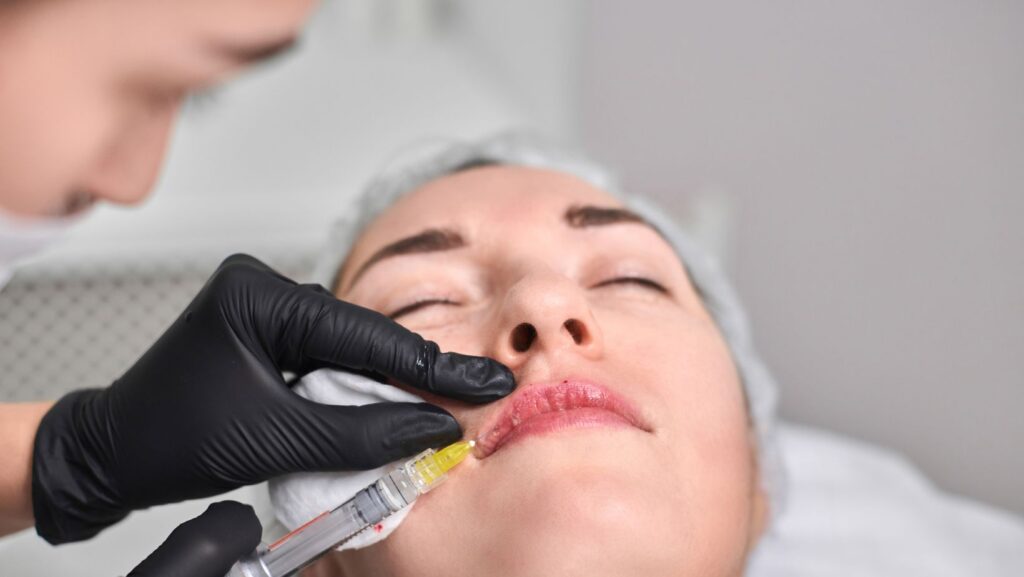
Lip treatment does not always mean adding noticeable volume. Small amounts placed along the vermilion border can restore definition. Strategic support around the mouth can reduce the appearance of lines while maintaining proportion. Careful assessment of facial balance guides the injection plan so results align with overall contour restoration.
Juvederm: A Commonly Used Hyaluronic Acid Filler Option
Several filler brands are available, each with formulations designed for specific areas of the face. Juvederm is widely used in clinical practice. Its product line includes different viscosities intended for cheeks, lips, and deeper folds.
Juvederm Voluma is often selected for midface support because of its thicker consistency and lifting capacity. Juvederm Ultra and Ultra Plus are commonly used for lips and moderate lines.
Longevity depends on placement depth, metabolism, and facial movement. Many hyaluronic acid fillers in this line last between 9 and 18 months. Maintenance appointments are typically spaced based on individual response and aesthetic goals.
Safety Considerations for Busy Parents
Time constraints often influence decision-making. Fillers are performed in-office and typically require minimal downtime. Mild swelling and bruising may occur for several days. Most patients return to daily activities quickly, though providers advise avoiding strenuous exercise and high heat exposure for a short period.
Medical assessment remains essential. A provider should review medical history, including autoimmune conditions, bleeding disorders, and previous cosmetic procedures. Knowledge of vascular anatomy is critical because rare complications can occur if filler enters a blood vessel. Hyaluronic acid fillers provide an added safety measure since they can be dissolved if needed.
Choosing an experienced injector reduces risk. Board-certified dermatologists and plastic surgeons receive extensive anatomical training. Qualified nurse injectors working under supervision also perform these procedures safely when properly trained. Consultation should include facial analysis, discussion of realistic outcomes, and explanation of potential risks.
Setting Realistic Expectations
Dermal fillers restore lost structure; they do not stop the aging process. Results are temporary because the body gradually metabolizes the injected material. High-mobility areas such as the lips may require touch-ups sooner than deeper structural regions.
Gradual maintenance often produces the most natural outcomes. Small adjustments over time help preserve contour without sudden changes. Parents balancing family and career responsibilities often prefer subtle refinement that aligns with their existing features rather than dramatic transformation.
Restoring facial contours with dermal fillers involves anatomical precision, careful product selection, and clear communication between patient and provider. For parents seeking a non-surgical option to address volume loss related to aging, stress, or hormonal change, fillers provide a medically established approach grounded in structural science rather than trend-driven aesthetics.