
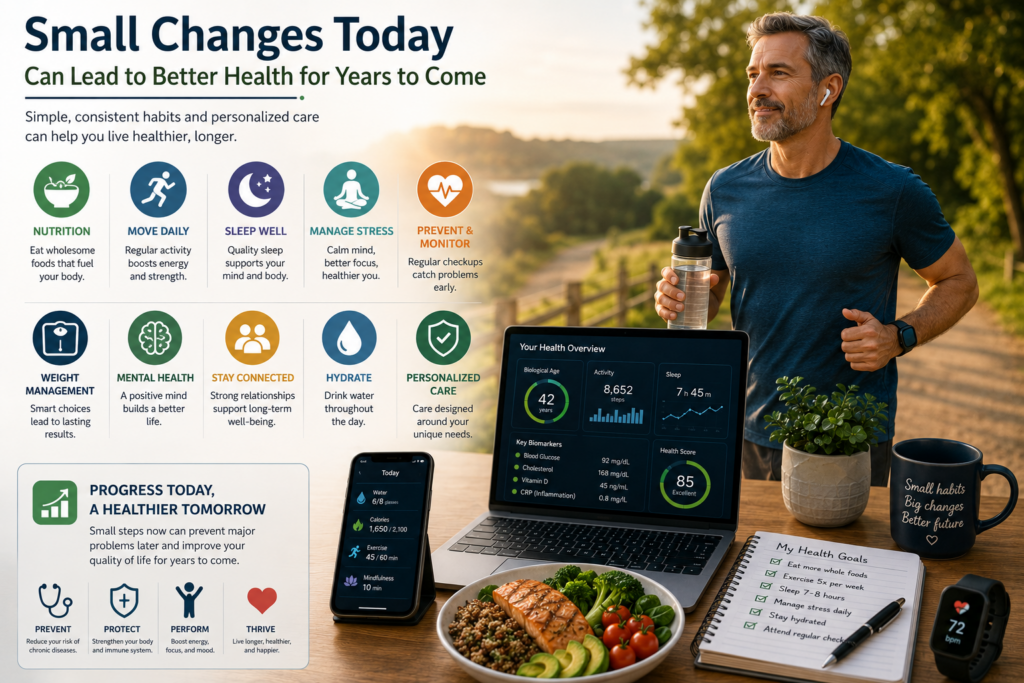
Good health rarely comes from one dramatic decision. Instead, it develops through consistent daily habits that support the body and mind over time. Small improvements in nutrition, physical activity, sleep, stress management, and preventive care can reduce the risk of chronic disease and improve overall quality of life.
Modern healthcare is also making it easier for people to personalize their wellness journey. By combining healthy lifestyle choices with evidence-based medical guidance, individuals can create sustainable routines that support long-term well-being. The goal isn’t perfection—it’s steady progress that lasts for years.
Why Small Habits Make a Big Difference
Many people believe they need a complete lifestyle overhaul to become healthier. In reality, research consistently shows that gradual improvements are easier to maintain than drastic changes.
Examples of small daily habits include:
Each positive habit builds upon another, creating lasting improvements without overwhelming your routine.
The Importance of Preventive Healthcare
Preventive healthcare focuses on identifying potential health concerns before they become serious. Rather than waiting for symptoms to develop, regular screenings and wellness assessments help people stay ahead of potential problems.
Routine preventive care may include:
These simple appointments often detect issues early, allowing for more effective treatment and better long-term outcomes.
Nutrition Forms the Foundation of Better Health
Healthy eating doesn’t require following extreme diets. A balanced approach that includes nutrient-dense foods supports nearly every system in the body.
A nutritious diet often includes:
Limiting highly processed foods and sugary beverages can also reduce inflammation and support healthy weight management over time.
Consistency matters much more than occasional perfection.
Regular Movement Supports Every Stage of Life
Exercise provides benefits far beyond weight control. Physical activity improves cardiovascular health, strengthens muscles and bones, supports mental health, and increases energy levels.
You don’t need intense workouts to see meaningful results.
Simple activities include:
Experts generally recommend combining aerobic exercise with muscle-strengthening activities each week for optimal health benefits.
Sleep Is One of the Most Powerful Health Tools
Sleep is often overlooked, yet it influences nearly every aspect of physical and mental health.
Quality sleep supports:
Creating a consistent bedtime routine and reducing screen time before sleep can significantly improve sleep quality.
Stress Management Protects Long-Term Wellness
Modern life comes with unavoidable stress, but chronic stress can negatively affect both physical and mental health.
Healthy stress management strategies include:
Learning healthy coping techniques helps reduce the long-term effects of stress on the body.
Personalized Wellness Is Becoming More Accessible
Healthcare is increasingly shifting toward individualized treatment plans rather than one-size-fits-all recommendations.
Many people now seek personalized longevity health strategies that consider their medical history, lifestyle, genetics, and long-term wellness goals. Customized care plans can provide more targeted guidance while encouraging sustainable habits that fit individual needs.
Rather than focusing solely on treating illness, this approach emphasizes maintaining health before serious conditions develop.
Medical Weight Management Continues to Advance
Obesity and metabolic disorders remain major health concerns worldwide. Alongside nutrition and exercise, healthcare providers now have additional medical tools available for appropriate patients.
Among newer treatment options, discussions around compounded tirzepatide dosage have become increasingly common. Since dosage recommendations depend on individual health conditions, treatment goals, medication tolerance, and professional medical evaluation, patients should always follow guidance from qualified healthcare providers rather than attempting self-adjustment.
Medical supervision helps ensure both safety and effectiveness throughout treatment.
Building Healthy Routines That Last
The biggest challenge isn’t starting healthy habits—it’s maintaining them.
Practical ways to stay consistent include:
Long-term success usually comes from habits that easily fit into daily life.
Mental Health Deserves Equal Attention
Physical health and mental health are closely connected.
People who prioritize emotional well-being often experience:
Speaking with mental health professionals when needed should be viewed as part of comprehensive healthcare, not as a last resort.
Healthy Aging Starts Earlier Than Most People Think
Many age-related conditions develop gradually over decades. This means the habits formed during young and middle adulthood often influence health later in life.
Healthy aging includes:
The earlier positive habits begin, the greater their long-term impact.
Technology Makes Wellness Easier to Track
Digital health tools have simplified many aspects of personal wellness.
Popular tools include:
These technologies provide useful information that helps people stay engaged with their health goals while sharing valuable data with healthcare providers.
Creating a Healthier Future One Step at a Time
Improving your health doesn’t require dramatic transformations overnight. Every healthy meal, every walk, every extra hour of sleep, and every preventive checkup contributes to a stronger foundation for the future.
The combination of consistent lifestyle habits, preventive medicine, personalized healthcare, and evidence-based medical guidance creates a practical path toward long-term wellness. By making thoughtful choices today, you invest in better health for many years ahead.
Frequently Asked Questions
How long does it take for healthy habits to show results?
Some improvements, like better sleep and increased energy, may appear within a few weeks, while long-term benefits often develop over several months or years.
Is walking enough exercise?
Brisk walking provides excellent cardiovascular benefits. Combining walking with strength training offers even greater health improvements.
Why are regular health checkups important?
Routine checkups help detect health issues early, allowing treatment before conditions become more serious.
Can small lifestyle changes really improve long-term health?
Yes. Research consistently shows that small, sustainable habits often produce greater long-term results than drastic short-term changes.
Should medical weight-loss treatments be used without supervision?
No. Prescription medications should always be used under the guidance of qualified healthcare professionals to ensure proper evaluation, dosing, and ongoing monitoring.