
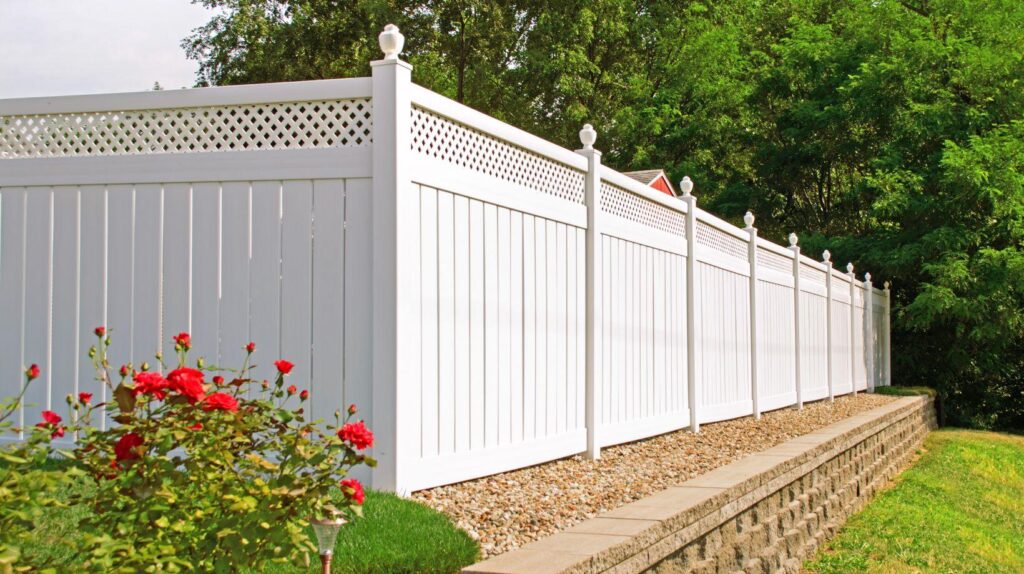
The practical difference between cedar and vinyl is not simply appearance versus maintenance. Cedar offers natural variation, flexible finishing, and component-level repairs, but it requires periodic surface care. Vinyl eliminates staining and painting, although product quality, installation, impact, and soil movement can still affect its performance. The better option depends on the site, desired appearance, repair expectations, and long-term maintenance budget.
Wood Fencing: Natural Cedar Character and Flexible Finishes
Cedar is valued for its warm color, visible grain, and traditional appearance. Because cedar is a natural material, no two pickets look identical. That variation helps a cedar fence blend with trees, garden beds, stone, and other materials around the property.
Wood fencing also offers design flexibility. Contractors can adjust picket styles, trim, rails, gates, and post details. A wood fence can weather naturally, or homeowners can apply stain, paint, or a clear sealer. Stain can deepen the cedar color, while paint creates a uniform finish.
Western red cedar heartwood has natural resistance to decay, but that does not make every cedar component equally durable or remove the need for maintenance. Persistent moisture, direct soil contact, termites and other insects, damaged finishes, and movement around posts or fasteners can still shorten the life of the fence. The interval between staining or sealing depends on the coating, sun and moisture exposure, surface preparation, and condition of the wood. Homeowners should inspect the finish regularly rather than rely on one fixed maintenance schedule. Cracked pickets, loose rails, or a damaged post can often be replaced individually, keeping some wood fence repairs focused.
A Vinyl Fence Offers a Simpler Care Routine
A quality vinyl fence may suit homeowners who prefer a consistent appearance and a less demanding maintenance routine. Vinyl does not need to be stained, painted, or sealed. Vinyl fence maintenance generally involves occasional cleaning to remove dirt, pollen, or marks from fence panels and fence posts.
Vinyl systems are available for privacy, security, and decorative applications, with the exact colors, textures, picket profiles, and gate configurations determined by the manufacturer’s product line. Some products imitate painted wood, but they retain a more uniform appearance than natural cedar.
Beyond routine cleaning, homeowners should check gates and hardware for movement. Dirt can collect near the ground, and damaged parts may need replacement. Vinyl is not subject to wood rot or termite damage, but its resistance to fading and weathering depends on the product formulation and manufacturing quality. Extreme temperatures, impact, installation quality, and soil movement can also affect a vinyl fence. Low maintenance does not mean maintenance-free.
Cedar Fence vs Vinyl Fence at a Glance
The table below compares cedar and vinyl in terms of appearance, routine care, customization, and common repair needs. It provides a useful starting point, but property conditions and installation requirements should still guide the final decision.
|
Factor |
Cedar fence |
Vinyl fence |
|
Appearance |
Natural grain and color that change over time |
Uniform, consistent finish |
|
Surface care |
May require stain, paint, or sealer |
Does not require stain or paint |
|
Cleaning |
Typically cleaned before refinishing |
Cleaned to remove dirt and buildup |
|
Customization |
Offers flexible picket, rail, trim, and gate details |
Depends on the available fence system and styles |
|
Repairs |
Individual wood components may be replaceable |
Damage may require replacement of an entire panel |
Initial Cost and Vinyl Fence Installation Considerations
The fence material is only one part of the project. Before contractors install the fence, they need to consider post depth, drainage, gate placement, slopes, and access. Wood posts suit some projects, while steel posts provide a metal support option where the fence design allows. Steel posts may appeal to homeowners who want wood fencing with a different structural approach.
Working with experienced wood and vinyl fence installers can help homeowners compare initial cost, labor costs, installation requirements, and site preparation without assuming either fence is automatically better. A lower initial cost does not always mean the lowest long-term cost once stain, paint, maintenance, repairs, and replacement parts are considered.
Which Fence Fits the Property for the Long Term?
Choose a cedar fence when natural wood, customization, and control over the finish matter most. Be prepared to clean the fence, monitor moisture near the ground, and maintain the stain, paint, or sealer to limit rot and decay.
Choose a vinyl fence when reduced upkeep, consistent color, and straightforward cleaning are higher priorities. The fence still needs inspections around posts, gates, rails, and panels. With either material, actual service life depends on product quality, installation, exposure, drainage, maintenance, and site conditions.
In addition to yard conditions, homeowners should review Oregon City’s residential fence height and placement requirements before finalizing the design. Slopes, trees, pets, safety needs, soil, moisture, landscaping, and access can change how the fence should be planned. Fence builders working with Oregon City properties can evaluate those details before vinyl fence installation or a new cedar fence project begins.
Cedar and vinyl solve the same boundary problem differently. Cedar offers natural character and more control over stain or paint. Vinyl offers a simpler care routine and a uniform look. Homeowners looking to save money should compare installation, routine maintenance, likely repairs, and replacement needs rather than focus only on the purchase price. The better fence is the one that fits the property, available budget, desired appearance, and level of maintenance the homeowner is prepared to handle.