
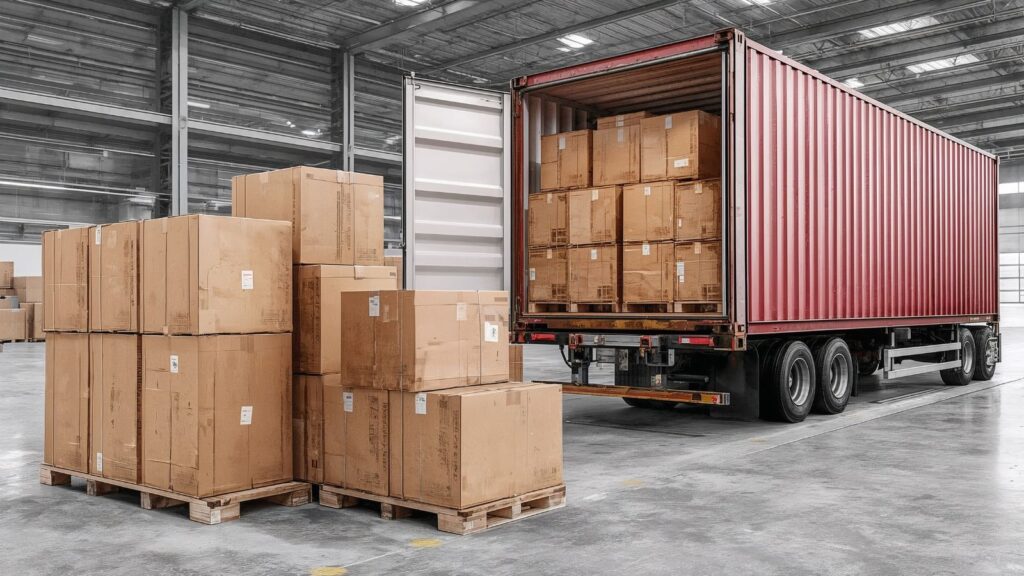
Periods of transition rarely arrive with perfect timing or clear boundaries. They often overlap with personal growth, shifting priorities, or a desire to simplify life without rushing into permanent decisions. In these moments, moving containers are not just a practical solution for transporting belongings. They become a quiet but powerful tool for creating space, both physically and mentally, so change can happen with intention rather than urgency.
When life changes faster than your environment
Many transitions are internal before they are external. A new direction, a change in values, or a growing need for simplicity can clash with an environment that reflects an older version of life. Belongings accumulate during one phase and may no longer align with the next, yet they still hold meaning, usefulness, or potential.
Living surrounded by items that no longer fit daily life can create friction. It becomes harder to focus, harder to feel settled, and harder to make thoughtful decisions. Creating temporary distance from those items allows the present moment to take shape without forcing the past to be erased. Space becomes a form of permission to evolve gradually.
This is especially true during periods when plans are still forming. When timelines are unclear and outcomes are not fixed, flexibility matters more than efficiency. Removing pressure from the environment helps prevent rushed decisions that are later regretted.
Reducing physical noise to regain clarity
Clutter is not only visual. It creates constant low level mental noise. Each object becomes an unfinished thought, a decision waiting to be made. Over time, this unresolved presence drains energy and attention.
By clearing space temporarily, the home becomes quieter. Rooms regain their purpose, movement becomes easier, and daily routines feel less heavy. This simplicity supports reflection and helps clarify what truly matters in the next phase of life. Decisions made from a place of calm tend to be more aligned and sustainable.
Distance from belongings can also change perspective. Items that once felt essential may lose importance, while others reveal deeper value. This shift is difficult to achieve when everything is constantly in view. Space allows reassessment without pressure.
Moving without forcing permanence
Movement does not always mean relocation. Sometimes it means shifting identity, habits, or priorities. During these moments, committing to permanent outcomes too early can limit growth.
Temporary storage supports non linear paths. It allows people to live lightly now while keeping future options open. This is particularly valuable for those who are redefining their lifestyle, exploring new rhythms, or stepping away from familiar structures without knowing exactly what comes next.
Instead of framing change as an all or nothing event, storage allows it to unfold in stages. Items can be reintroduced when they truly serve a purpose, rather than by default. This approach respects both continuity and growth.
The emotional balance between holding on and letting go
Objects often carry emotional weight. They represent memories, effort, identity, and possibility. Letting go too quickly can feel like losing parts of oneself, while holding on to everything can prevent forward movement.
Temporary storage creates a middle ground. It allows belongings to exist without dominating daily life. This balance supports emotional well being during uncertain periods, offering stability without stagnation.
At the same time, physical distance can help separate identity from possessions. When items are not constantly present, it becomes easier to focus on experiences, relationships, and direction. Storage becomes a tool for intentional living rather than avoidance.
Simplifying daily life during complex transitions
Major life changes already demand emotional and mental energy. Adding environmental chaos makes them harder than necessary.
When living spaces are clear, routines become smoother. Cleaning takes less effort, focus improves, and the home feels supportive instead of demanding. This simplicity is not about perfection, but about functionality. Rooms work as they should, rather than serving as temporary holding areas.
This practical ease has a cumulative effect. Less friction in daily tasks frees up energy for reflection, creativity, and rest. During transitions, that energy is essential.
Flexibility as a long term advantage
Flexibility is often underestimated. Yet it is one of the most valuable qualities during periods of change.
Temporary storage allows adaptation without commitment. Plans can shift without creating logistical stress. Opportunities can be explored without immediate sacrifice. This adaptability supports growth that feels organic rather than forced.
For those choosing unconventional paths or redefining success outside traditional structures, flexibility becomes a form of freedom. Storage supports this freedom quietly, without imposing rigid timelines or outcomes.
Making thoughtful decisions at the right pace
Rushed decisions often prioritize speed over alignment. While they may solve immediate problems, they can create long term dissatisfaction.
Creating space slows the process just enough to allow clarity. It reduces decision fatigue and removes the constant pressure to resolve everything at once. With fewer distractions, priorities become clearer and choices more intentional.
This pace encourages better long term outcomes. Items are kept because they serve a purpose, not because they were never reconsidered. Letting go happens with confidence rather than regret.

Simplicity as support, not restriction
Intentional living is not about having less for the sake of less. It is about having what supports the life being lived now.
Temporary storage aligns with this philosophy. It separates long term value from short term necessity, allowing possessions to exist without controlling the present. This creates a lighter, more responsive environment.
Simplicity, in this sense, is not restrictive. It is supportive. It reduces friction and creates room for growth, reflection, and movement.
Creating space for what comes next
Every chapter of life benefits from room to breathe. Managing belongings intentionally is not a logistical detail, but a strategic choice that influences clarity, energy, and direction.
Allowing change to unfold with intention
Moving containers are not just about holding items. They hold possibility. They create a pause that supports progress rather than delaying it. By separating living space from storage space, transitions become less overwhelming and more deliberate.
Creating space is often the first step toward meaningful change. When the environment no longer competes for attention, it becomes easier to listen to what comes next. In that quiet, intentional space, life has room to evolve naturally, without pressure, and with far greater alignment.