
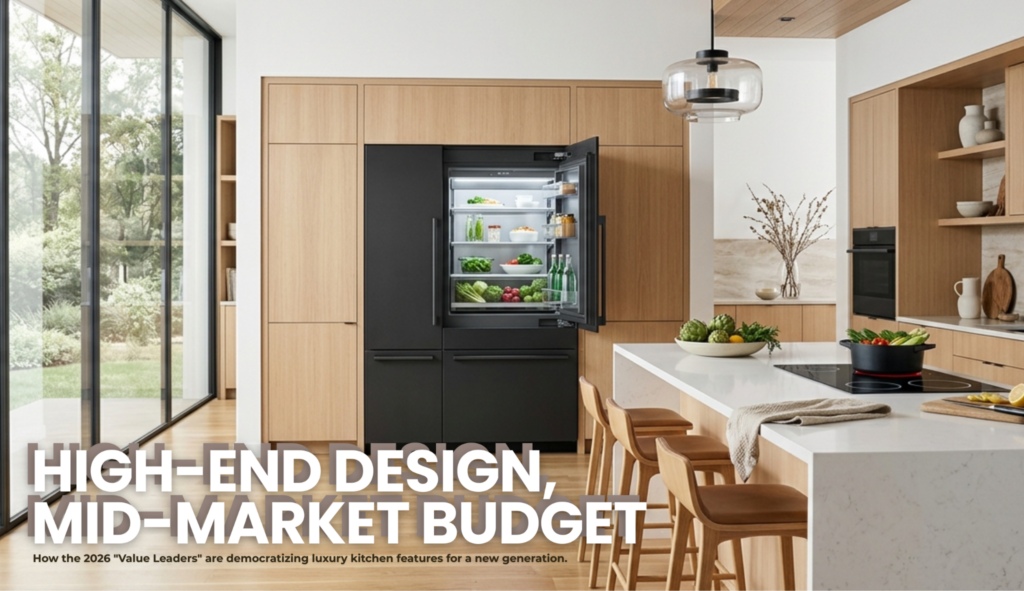
The kitchen has long been the heart of the home, but in 2026, it is also the brain. Until recently, the dream of a “smart kitchen”—one where the oven preheats via a smartphone app, the fridge tracks expiry dates, and the dishwasher optimizes water usage based on soil levels—was a luxury reserved for those with deep pockets. High-end European labels set the standard, but their price tags often exceeded the total renovation budget of a first-home buyer. However, we have entered an era of significant feature democratization. Technology that was once exclusive to $3,000 premium units has rapidly trickled down into the mid-market, making the affordable home appliances found in modern retail catalogues more powerful than the flagship models of five years ago. This shift allows Gen Z and Millennial renovators to achieve a high-end aesthetic and cutting-edge functionality without the “luxury tax” typically associated with designer brands.
The Rise of the Challenger Brand
In the 2026 appliance market, the term “budget brand” has been replaced by “value leader.” Companies like Hisense, Beko, and Haier have transitioned from being secondary options to primary contenders. These “challenger” brands have successfully decoded the luxury blueprint, offering sleek stainless steel finishes, integrated touchscreens, and minimalist designs that mimic the look of premium German or Italian engineering.
The secret to their success lies in vertical integration and rapid R&D cycles. While traditional luxury brands often maintain a slower, more deliberate release schedule to preserve exclusivity, value leaders are quick to adopt and scale new technologies. For a tech enthusiast on a budget, this means that a Hisense refrigerator might offer a built-in water dispenser and Wi-Fi connectivity at a fraction of the cost of a legacy premium brand. The functionality is no longer a compromise; it is the standard.
Wi-Fi Connectivity: No Longer a Gimmick
There was a time when a Wi-Fi-enabled toaster was the punchline of a joke about unnecessary tech. In 2026, however, connectivity is a fundamental tool for energy efficiency and convenience. The democratization of IoT (Internet of Things) chips has allowed brands like Haier to integrate smart features across their entire range.
For a busy professional, the ability to check if the dishwasher is finished from the office, or to receive a notification that the fridge door was left ajar, provides genuine peace of mind. More importantly, these smart features allow for remote diagnostics. If an appliance has an issue, the software can often identify the fault and send a code to a technician, reducing repair costs and downtime. What was once a $5,000 “smart home” centerpiece is now a standard feature in an $800 oven, proving that intelligence is no longer an elite trait.
The Air-Fryer Revolution in Built-in Ovens
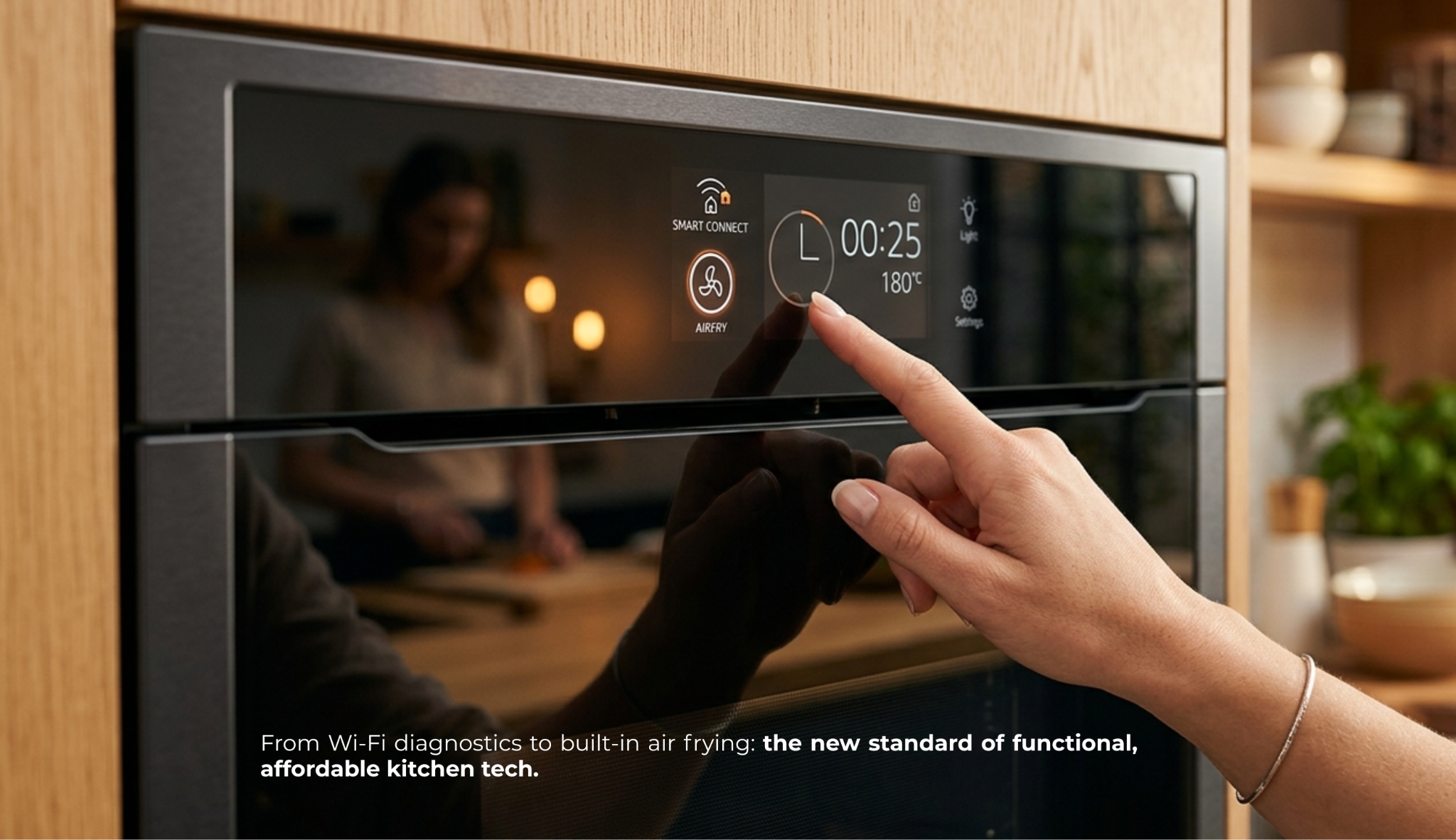
Perhaps the most significant functional shift in recent years is the integration of specialized cooking modes into standard wall ovens. The air-fryer craze of the early 2020s led to a cluttered benchtop of single-use gadgets. In 2026, the challenger brands have solved this by incorporating high-velocity fans and perforated trays directly into their built-in units.
Brands like Beko have led the charge in this space, offering ovens with “AirFry” modes that deliver the same crispy results as a standalone unit but with the capacity to feed a whole family. By moving this feature from a premium add-on to a standard inclusion in the $900–$1,200 range, these brands have effectively eliminated the need for extra appliances. This not only saves money but also preserves the clean, minimalist lines of a modern kitchen renovation.
Steam Cleaning: Luxury Maintenance for the Masses
Pyrolytic cleaning—the process where an oven heats to 500°C to turn grease into ash—was the hallmark of a high-end kitchen for decades. While effective, it is energy-intensive and expensive to manufacture. The “luxury look for less” movement has popularized an alternative: high-efficiency steam cleaning.
Many value-leading ovens now feature a dedicated steam-clean cycle. By adding a small amount of water to the base of the oven, the machine uses steam to loosen grime, making it easy to wipe away without harsh chemicals or extreme heat. This feature is now common in units priced under $1,000. For the eco-conscious Gen Z renovator, steam cleaning offers a sustainable, low-energy way to maintain a pristine kitchen, proving that premium maintenance doesn’t have to come with a premium price tag.
Multi-Door Fridges and the Aesthetic of Space
The “French Door” or multi-door refrigerator is the ultimate kitchen status symbol. Its wide shelves and symmetrical design provide a professional-chef aesthetic that instantly elevates a room. Historically, these units were prohibitively expensive due to the complexity of the cooling systems required to manage multiple zones.
Haier and Hisense have disrupted this category by offering multi-door configurations that include “MyZone” or “Variable Temperature” drawers. These allow users to switch a specific compartment from a fridge to a freezer at the touch of a button. In 2026, these high-capacity, flexible units have moved from the $4,000 bracket into the $1,500–$2,000 range. For a first-home buyer, this means they can have the “statement piece” fridge they saw on a renovation show without blowing their entire furniture budget.
Induction Cooking: Precision for Every Chef
Induction cooktops were once the darlings of high-end culinary magazines, praised for their safety and lightning-fast heating speeds. Because the technology relies on electromagnetic fields rather than traditional heating elements, it was expensive to produce.
Today, the mass production of induction coils has seen prices plummet. Value leaders now offer four-zone induction cooktops with touch controls and boost functions for under $800. For tech enthusiasts, the precision of induction is a major drawcard—the ability to melt chocolate without a bain-marie or boil water in ninety seconds is a game-changer. By making induction affordable, brands like Beko are helping young homeowners build kitchens that are not only smarter but significantly safer and more energy-efficient than those of the previous generation.
Sustainable Luxury: The ESG Factor
Gen Z and Millennial buyers are arguably the most value-driven demographic in history—not just in terms of price, but in terms of ethics. They look for high energy-star ratings and sustainable manufacturing processes. Challenger brands have recognized this, often outperforming legacy luxury brands in energy efficiency.
A 9-star heat pump dryer from a brand like Beko can cost half as much as a 6-star vented dryer from a premium label, yet it will save the homeowner hundreds of dollars in electricity bills over its lifespan. This “long-term value” is a core component of the 2026 budget kitchen. It’s not just about the upfront cost; it’s about the total cost of ownership. Building a smart kitchen on a budget is now an exercise in environmental responsibility as much as financial prudence.
Creating a Cohesive Look with Value Packages
One of the challenges of a budget renovation is making various appliances look like they belong together. Luxury brands often sell “suites” of appliances that share a common design language. Challenger brands have adopted this strategy, offering “Value Packages” that bundle an oven, cooktop, dishwasher, and rangehood.
By sticking to a single brand for the core cooking appliances, renovators can ensure that the stainless steel finishes match and the LED displays are the same color. This visual cohesion is what creates the “luxury look.” When the handles on the oven match the profile of the dishwasher, the kitchen feels architecturally designed rather than pieced together.
The Role of the Modern Retailer
In this landscape of rapid democratization, the role of the retailer has shifted from “seller” to “curator.” With so many challenger brands offering similar features, the modern renovator relies on experts to highlight the “Value-Leaders.” Retailers like Bi-Rite have become essential guides for the 2026 consumer, filtering through the noise to find the brands that offer the best reliability-to-price ratio.
These retailers understand that a Gen Z buyer isn’t just looking for a bargain; they are looking for a lifestyle. They want the tech, they want the look, and they want the warranty support that gives them confidence in their purchase. By focusing on brands that offer long-term support and readily available parts, retailers ensure that the “luxury for less” model is a sustainable one.
Conclusion: The New Standard of Living
The smart kitchen of 2026 is no longer an aspirational fantasy; it is an attainable reality. The democratization of technology has broken down the barriers that once separated the “haves” from the “have-nots” in the world of home design. Wi-Fi, air-frying, steam-cleaning, and induction cooking are now the tools of the many, not the toys of the few.
For the first-home buyer or the millennial renovator, the message is clear: don’t be blinded by a heritage logo. The value leaders of today—Hisense, Beko, Haier, and others—are delivering the innovation and aesthetic that define the modern home. By shopping smart and focusing on feature-rich, high-efficiency units, anyone can build a kitchen that looks like a million dollars on a 2026 budget. The heart of the home has been upgraded, and everyone is invited to the table.