
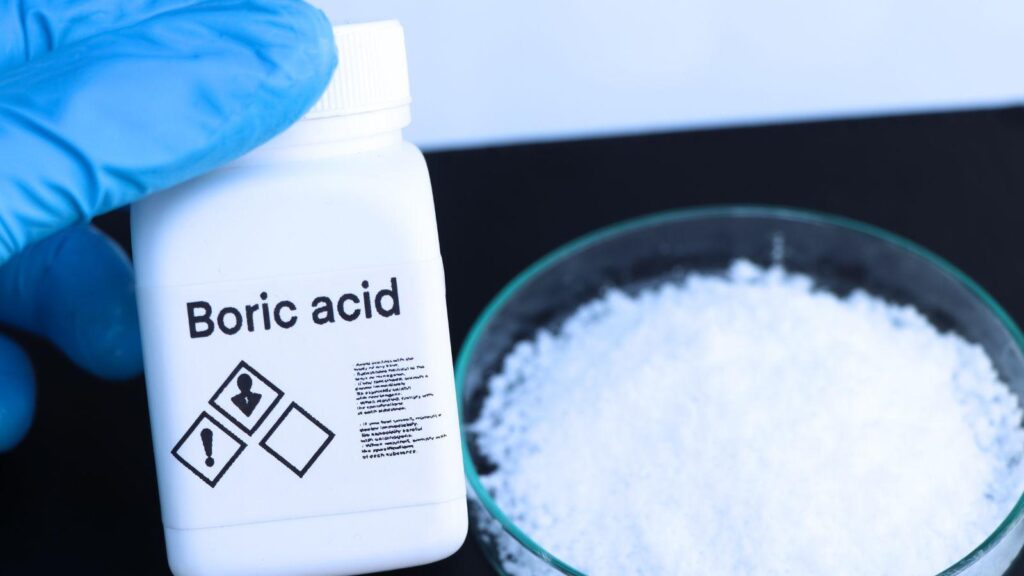
Boric acid as a vaginal therapeutic has a longer clinical history than most patients realise. The compound has been used in obstetric and gynaecological practice for over a century, and the modern evidence base for its application in recurrent bacterial vaginosis and recurrent vulvovaginal candidiasis is well documented in literature catalogued through the U.S. National Library of Medicine. What is newer is its appearance in mainstream over-the-counter and telehealth-prescribed formulations, which has pushed the compound from a clinician-recommended adjunct into a household-level option.
The mechanism is not antibiotic in the traditional sense. Boric acid disrupts the biofilm structures that resistant bacterial and fungal communities use to persist in the vaginal environment. Standard antibiotic and antifungal regimens often clear the active infection without disrupting the underlying biofilm, which is one of the reasons recurrence is so common in this category of conditions. Boric acid addresses the biofilm layer, which makes it particularly useful in cases where standard regimens have failed to produce durable resolution.
Specialist telehealth and direct-to-patient pathways now include boric acid for uti and adjacent indications inside their treatment options, typically as part of a structured protocol rather than as a standalone purchase. The clinical framing matters. Boric acid is not a first-line treatment for an acute uncomplicated UTI, where standard antibiotic therapy remains the appropriate choice. It is a useful adjunct or second-line option for patients with recurrent infection patterns where biofilm disruption is part of the clinical reasoning, and for adjacent conditions including recurrent BV and recurrent vulvovaginal candidiasis where its role is better established.
The safety profile is well characterised at the standard dosing used in vaginal suppository form. The compound is for vaginal use only and should never be ingested. Pregnancy is a contraindication. Patients with active vaginal bleeding or undiagnosed pelvic pain should consult a clinician before use. None of these constraints make boric acid an unusual therapeutic. They are the same kind of constraints that apply to most clinically active compounds.
The patient-side appeal is that boric acid offers a non-antibiotic option for patients who are concerned about cumulative antibiotic exposure or who have experienced antibiotic-associated complications. The Centers for Disease Control and Prevention has emphasised the importance of antibiotic stewardship at population scale, and individual patients adding non-antibiotic adjuncts to their personal protocols is one of the small ways that stewardship plays out in practice.
The honest version of the picture is that boric acid is a useful, evidence-supported, well-characterised therapeutic with a defined role in the management of recurrent vaginal infections. It is not a miracle compound, and it is not a substitute for clinical assessment when symptoms are atypical or persistent. Used inside a sensible clinical framework, it does what it claims to do, and the recurrence rates in patients who add it to their protocol are meaningfully lower than the rates in patients who rely on standard regimens alone.
FAQ
Is boric acid appropriate for an acute UTI? First-line treatment for acute uncomplicated UTI is standard antibiotic therapy. Boric acid has a more established role in recurrent BV and recurrent vulvovaginal candidiasis.
How is boric acid administered? As a vaginal suppository at a defined dose, typically used over a structured course rather than indefinitely.
Is boric acid safe during pregnancy? No. Pregnancy is a contraindication. Patients who are pregnant or trying to conceive should not use boric acid.
Can boric acid replace antibiotics? No. It is a complementary or second-line option in specific clinical scenarios, not a replacement for antibiotic therapy where antibiotic therapy is indicated.