
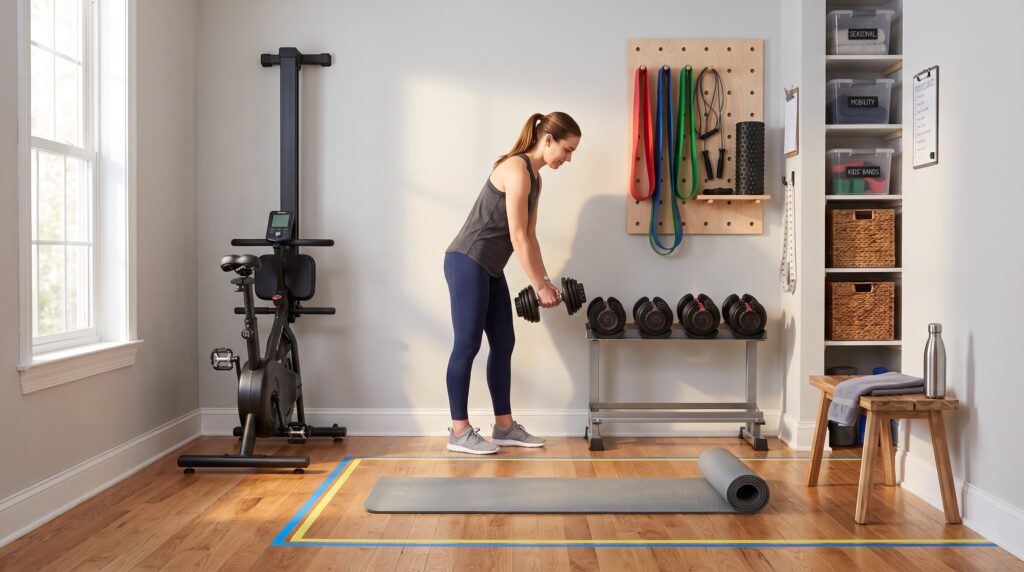
How to Organize a Clutter-Free Home Workout Space begins with a small decision: reserve a clear floor area and keep only the tools that support chosen goals. A tidy training corner reduces trip hazards, speeds setup, and makes workouts feel easier to start. This guide explains why uncluttered zones matter, how to measure and zone a room, smart storage at every price point, equipment choices and rotation, plus daily habits and a weekly reset checklist to keep the space ready and safe.
Principios Clave
- Un espacio de entrenamiento en casa libre de desorden reduce riesgos de accidentes y facilita el inicio de la actividad física.
- Medir y delimitar zonas específicas para movimiento, equipos y almacenamiento optimiza la funcionalidad del área de ejercicio.
- El almacenamiento vertical y soluciones adaptadas a distintos presupuestos maximiza el espacio disponible y mantiene el orden.
- Priorizar equipos multipropósito y hacer rotación según programas actuales ayuda a mantener bajo el inventario y fomenta la constancia.
- Adoptar hábitos diarios de mantenimiento y una revisión semanal rápida evita la acumulación de desorden y preserva la seguridad.
- Un entorno organizado y despejado impulsa la motivación para ejercitarse y contribuye al bienestar a largo plazo.
Why A Clutter-Free Home Workout Space Matters
A clutter-free home workout space directly reduces injury risk and friction to exercise. Clearing 6–7 feet of open area for movement or about 36 square feet for strength work gives a person room to lunge, swing a kettlebell, or roll a mat without hitting furniture. When heavy items are kept low and close to walls, they protect flooring and shorten setup time: a single misplaced dumbbell can cause a trip that ruins a session.
Beyond safety, visibility matters. Seeing a mat on the floor and a pair of bands hanging on a peg acts as a visual prompt. A tidy space increases the chance that someone will choose a five-minute mobility flow over skipping exercise entirely. GoodNever’s broader wellness resources show how environment nudges behavior, and readers planning their layout may find related tips in the site’s overview of health and lifestyle guidance. For design examples and mindset cues, consult the central lifestyle overview.
Assess Your Space And Define Your Workout Needs
Start by mapping reality: measure the room, mark doors and outlets, and test movement paths. The first fact: accurate measurements prevent costly layout mistakes. A quick method is to tape the perimeter on the floor and perform the most common exercises in that taped zone to confirm clearance.
Decide primary modes, strength, cardio, mobility, and rank them by weekly frequency. If strength is dominant, prioritize weight storage near a wall: if mobility dominates, keep the center open. Note where natural light and ventilation sit: someone who trains early may need a quiet corner away from family traffic.
Practical anchors include a single-cardio-machine plan (rower or bike), an adjustable dumbbell set, and a mat for mobility. This aligns with GoodNever’s tips on organizing a motivating workout space, which demonstrates how simple, purpose-driven choices keep clutter low and adherence high.
Measuring And Zoning For Functionality
Keep three functional zones: movement, equipment, and storage/overflow. Stating the main rule first: put dynamic activities in the center and reserve walls for machines and racks. Use 0.9–1.2 meters clearance around large machines and roughly 2.0–2.4 meters width for exercises that involve stepping or rotation.
To create zones, mark them with colored tape or a rug. Movement zone: a non-slip mat and 36 square feet of clear floor. Equipment zone: a bench, weight tree, or machine flush against a wall. Storage/overflow: high shelves or labeled bins for seasonal or rarely used items.
Practical test: do a burpee-to-jump in the taped movement zone. If an elbow or foot brushes furniture, increase clearance or rearrange. For families, position the storage zone where children cannot reach heavy items: store lighter items like bands and sliders lower for daily access. This zoning approach balances safety and convenience.
Smart Storage Solutions For Any Budget
First fact: vertical storage multiplies floor space. Wall-mounted pegboards, hooks, and slim shelves turn a 12-inch strip into a full equipment closet. For a low-budget option, use labeled baskets and under-furniture bins to keep small items off the floor.
Mid-range upgrades include a wall rack for dumbbells and a compact shelving unit for folded mats. Heaviest items should remain on the floor, anchored against walls. Place daily-use items, resistance bands, jump rope, towel, where they are visible: out-of-season or rarely used gear goes higher or into labeled bins.
A specific layout that works: pegboard for bands and ropes, floating shelf for foam roller and water bottles, bin for ankle weights. Busy households can borrow storage ideas from family-focused articles like the piece on storage that actually helps at home. Small investments in hooks and clear bins often yield the biggest reduction in perceived clutter.
Choosing, Storing, And Rotating Essential Equipment
The core insight: prioritize multipurpose items and rotate to match current programs. An adjustable dumbbell set, resistance bands, a quality mat, and one main cardio piece (bike or rower) cover most goals while keeping inventory low.
Store an adjustable dumbbell on a low shelf or compact stand near the equipment zone. Hang bands on a pegboard at eye level. Keep a foam roller and mobility tools in a slim vertical tote. For seasonal or program-specific tools, sleds, heavy sandbags, use labeled bins in the overflow zone and move them into the equipment zone only during focused training blocks.
A practical rotation rule: review gear every four weeks. If an item hasn’t been used in 30 days, move it to overflow storage or offer it for sale. That simple decision frees space and prevents accumulation. For guidance on choosing the right minimal kit, GoodNever’s article on finding health resources provides navigation help through curated content and topic discovery on the site’s hub.
Daily Habits, Maintenance, And A Weekly Reset Checklist
Start with a single truth: small daily actions prevent big clutter problems. Each day, return equipment to its assigned spot and wipe high-touch surfaces. Keeping the central mat clear should be non-negotiable.
Weekly reset checklist (practical, 10 minutes):
- Remove non-workout items that migrated into the space.
- Reorganize baskets and restock water/towels.
- Check walkways and clear 6–7 ft movement zone.
- Inspect straps, bands, and machine bolts for wear.
Honest warning: many people skip the weekly reset for two weeks, then face a pile-up that takes an hour to fix. Scheduling a 10-minute Sunday reset reduces that risk. For readers who want procedural templates and broader organization methods, GoodNever offers a clear guide to keeping a family home functional without perfection in a related cleaning guide.
For those building routines from scratch, the Mayo Clinic’s starter steps for launching a fitness program provide evidence-based structure and can justify staging goals across weeks.
Conclusion
Measured zones, vertical storage, and quick daily habits make a clutter-free home workout area easy to keep. When equipment is chosen for versatility and rotated, the space supports consistent training and reduces friction. A short weekly reset preserves safety and the desire to exercise, making the room a reliable partner in long-term wellness.